
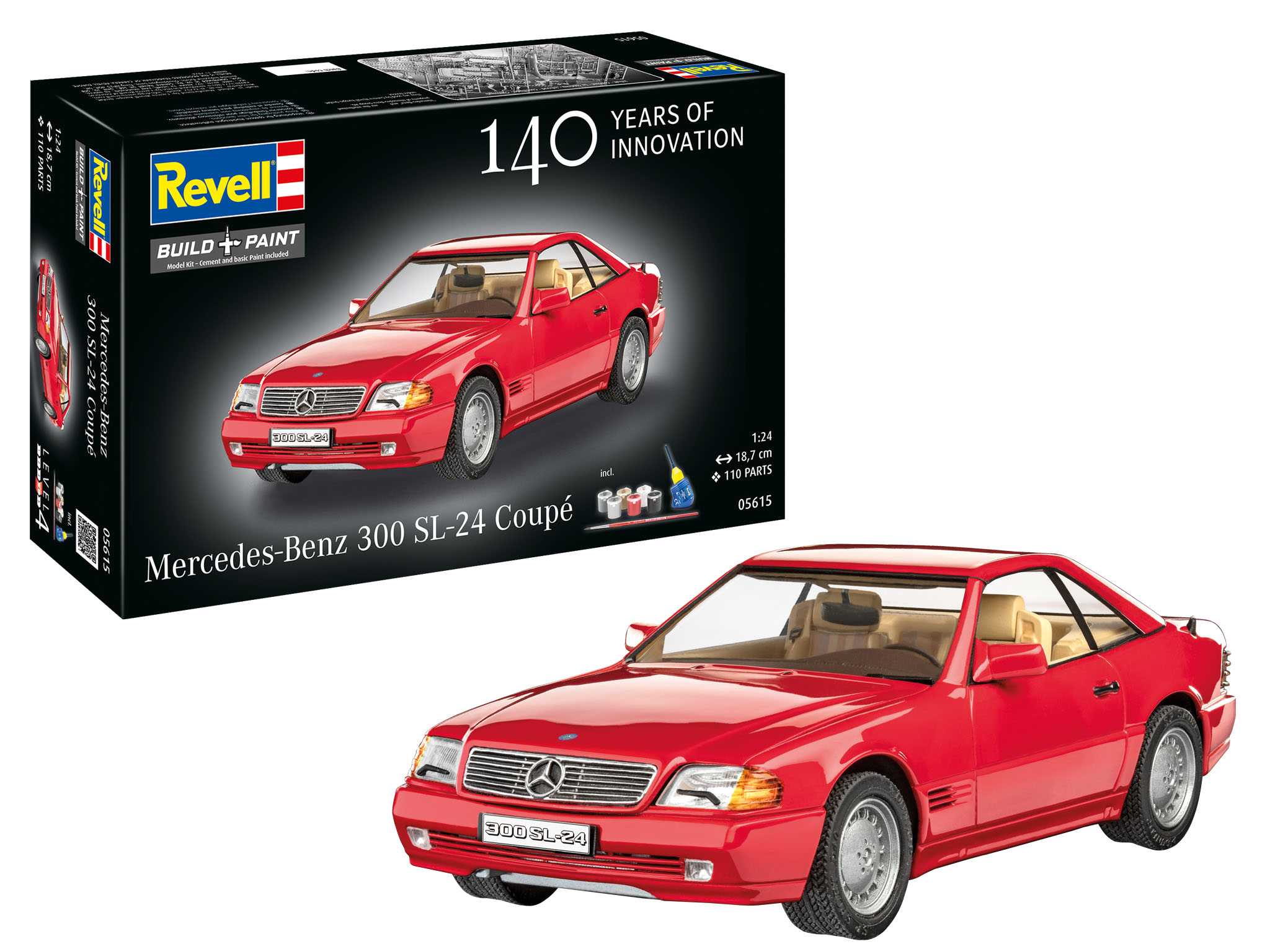
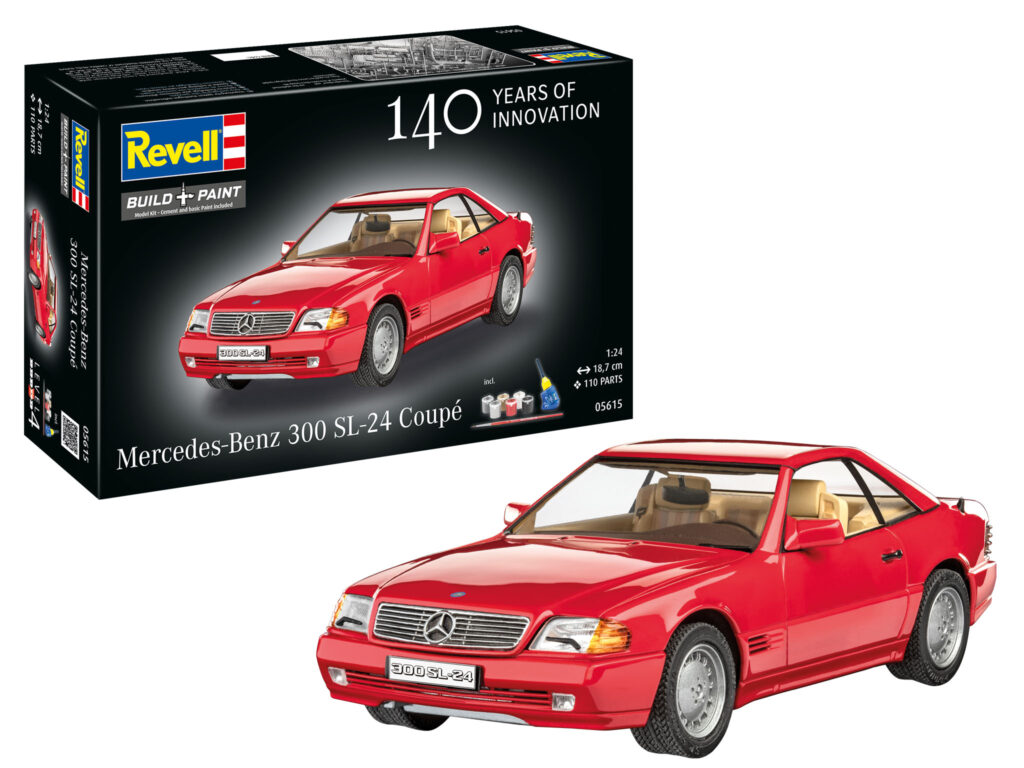
In June 2026, Mercedes-Benz is celebrating an anniversary that has no equal in automotive history: 140 years ago, on 29 January 1886, Carl Benz filed a patent in Mannheim for his three-wheeled “vehicle powered by a gas engine” (patent specification DRP no. 37435). This is regarded as the birth certificate of the automobile and the foundation of a brand that to this day stands for engineering excellence, luxury and timeless design. To mark this occasion, we at Revell have brought the Mercedes-Benz 300 SL-24 Coupé gift set in 1:24 scale back into our range as a “reintro.” This kit combines the appeal of one of the most beautiful roadsters of all time with the history of a global brand and is just as well suited to an ambitious build project as it is to a collector’s piece with real substance.
From the Geneva Motor Show to Legend: The Birth of the R129
In March 1989, a car took to the stage at the Geneva Motor Show that would shape the world of sports cars for years to come. The new SL of the R129 model series replaced the venerable R107, which had been in production for 18 years, and launched in three variants: the 300 SL with the proven two-valve inline six-cylinder M103, the 300 SL-24 with the new four-valve inline six-cylinder M104, and the 500 SL with the powerful V8 engine M119. The public response was overwhelming. The planned annual production of 20,000 units was practically sold out immediately, and buyers had to accept waiting times of several years.
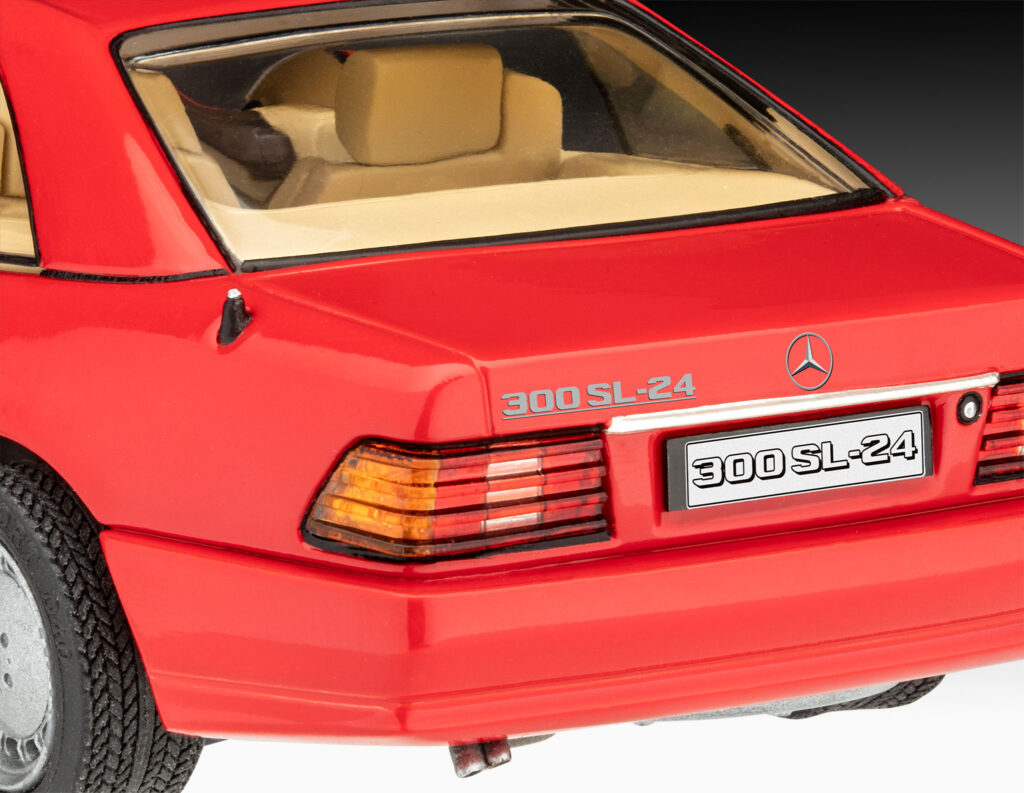
The 300 SL-24, immortalised in our kit, carried the brand’s most famous model name: “300 SL.” This name dates back to the legendary gull-wing model of 1954 and has stood for sportiness with the star for over seven decades. The number “24” in the model name reveals the technical highlight: 24 valves, in other words four per cylinder instead of the usual two. This four-valve technology was used by Mercedes-Benz for the first time in the M104 engine and, combined with variable intake camshaft adjustment, delivered a power increase to 170 kW (231 hp) at 6,300 rpm. Top speed was 240 km/h, and the sprint from 0 to 100 km/h took 8.4 seconds. For an open touring car with the highest comfort standards, that was an impressive showing in 1989.
Bruno Sacco: The Man Behind the Shape
The lines of the R129 bear the signature of a man who shaped the face of Mercedes-Benz like no other: Bruno Sacco. Born in Udine in 1933, the Italian joined Daimler-Benz in Sindelfingen in 1958 as a young stylist, fascinated by the 300 SL gull-wing and the Silver Arrows of Formula 1. Over the following decades he worked his way up from engineer to head of the main design department and, from 1975 until his retirement in 1999, was responsible for the appearance of every Mercedes-Benz passenger car.
Sacco’s design philosophy was based on two core principles, which he called “horizontal homogeneity” and “vertical affinity.” Horizontal homogeneity meant that every Mercedes, from the smallest to the largest model, had to be recognisable as a member of the same family. Vertical affinity ensured that a new model never made its predecessor look outdated. Sacco calculated the total lifespan of a Mercedes-Benz at around 30 years, from development through production to its last day on the road. His designs therefore had to remain current for three decades.
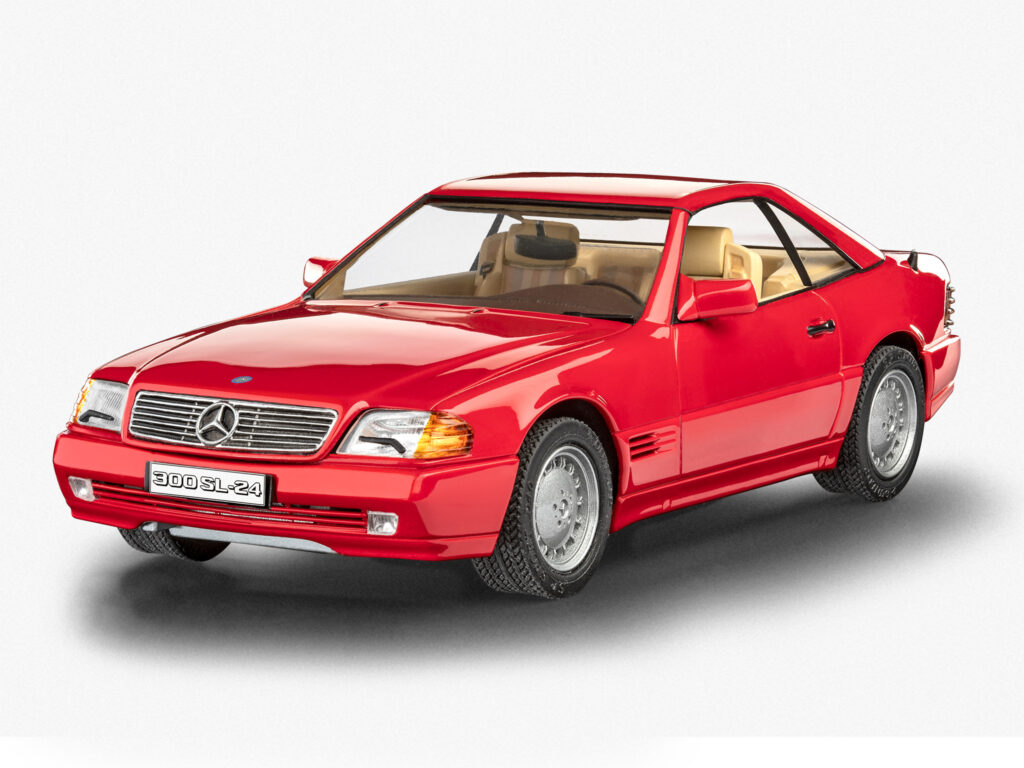
The R129 is perhaps the purest example of this philosophy. The clean wedge shape, the long bonnet proportions, the compact tail and the flowing lines combine sportiness with the unmistakable Mercedes identity. A drag coefficient of 0.32 was an outstanding figure for an open-top sports car in the early 1990s. At its launch, the R129 was honoured with the international Car Design Award, and the jury praised the “ensemble of safety innovations, exemplary ergonomic solutions and consistent cultivation of the brand’s characteristic design culture.” Bruno Sacco passed away on 19 September 2024 at the age of 90 in Sindelfingen. His life’s work, which besides the R129 also includes the W126 S-Class, the W201 (190 series) and the W124 E-Class, continues to shape the image of Mercedes-Benz to this day.
Technology That Made History: Innovations of the R129
The R129 was not only beautiful, but also a pioneering vehicle in technological terms. Probably the most spectacular innovation was the automatic roll-over bar, which remained hidden out of sight behind the seats during normal driving. If a sensor detected the risk of a rollover, the bar shot upward electromagnetically in just 0.3 seconds, protecting the occupants. This solution was a world first in automotive engineering and influenced the safety standards of open-top sports cars for decades.
The seatbelt system also set new standards. The R129 was the world’s first vehicle in which three-point seatbelts with belt tensioners, height adjustment and head restraint adjustment were combined into a single integrated unit. More than 20 patents went into the development of this system alone. The R129 was also the first convertible with a standard wind deflector, which significantly improved driving comfort at high speeds with the top down.
The chassis, with damper-strut front suspension and multi-link rear suspension, was based on the proven concept of the W124 series but was extensively modified for the roadster. The ADS (Adaptive Damping System) was available as an option, a speed-dependent, electronically controlled damping system that automatically adjusted ride comfort and handling depending on the situation. As standard, the R129 came with fixed-calliper disc brakes and ABS, 16-inch alloy wheels and an electro-hydraulic soft top with a colour-matched tonneau cover.
Princess Diana and the Red SL: A Royal Controversy
Probably the most famous anecdote surrounding the R129 involves Princess Diana. In 1991, she traded her Jaguar XJ-S for a metallic red 500 SL, becoming the first member of the British royal family to privately drive a foreign car. The decision triggered a genuine media storm. Politicians and trade unions criticised the fact that a member of the royal family was ignoring the British car industry, and Buckingham Palace tried to smooth things over by emphasising that the car was merely leased and that Diana would continue to drive a Jaguar at official events.
Under the continued pressure, Diana eventually returned the car to Mercedes-Benz in 1992. Today, that very same metallic red 500 SL stands in the Mercedes-Benz Museum in Stuttgart, parked next to the Popemobile, and is one of the most photographed exhibits in the house. Other celebrities of the early 1990s drove the R129 too: Harrison Ford was regularly photographed in his SL 500, and in the world of TV series and film, the R129 became a visual shorthand for success and glamour.
The R129 in Film and Television
In Hollywood, the R129 quickly became the prop of choice whenever a character needed to convey wealth, sophistication or a certain moral ambiguity. In Robert Altman’s satire “The Player” (1992), Tim Robbins drove a 300 SL as a ruthless Hollywood producer. The R129 also appears in Robert Zemeckis’s black comedy “Death Becomes Her” (1992), starring Meryl Streep, Goldie Hawn and Bruce Willis. The crime series “Columbo” used the 500 SL as the car of wealthy suspects in several episodes of the early 1990s, a recurring motif that cemented the car’s status as a status symbol in the minds of an entire generation. An R129 also appeared in “The Sopranos,” underlining the car’s role as an expression of power and taste.
The sheer presence of the R129 in the pop culture of the 1990s and 2000s is no coincidence. In a decade in which automotive design often swung between angular austerity and forced roundness, the R129 looked timelessly elegant. This design assurance made it the ideal film car: it needed no explanation, its mere presence on screen already told a story.
100 Years of Mercedes-Benz: Why This Anniversary Matters
On 28 and 29 June 1926, Daimler-Benz AG was officially founded in Berlin. The two oldest car manufacturers in the world, born out of the inventions of Carl Benz and Gottlieb Daimler, who had each independently invented the automobile in 1886, merged into a single company whose three-pointed star became arguably the most famous trademark in the automotive world. On 21 August 1926, the joint trademark was officially registered: the Mercedes star of the DMG, surrounded by the laurel wreath of Benz & Cie., with the embedded word marks “Mercedes” and “Benz.”
Our Mercedes-Benz 300 SL-24 Coupé (100 Years Mercedes-Benz) kit is a tribute to this 100-year tradition. The R129, created during the golden age of Mercedes engineering under Bruno Sacco, embodies the values that have defined the brand for a century: technological excellence, design clarity and the ambition not simply to build a car, but to set an automotive benchmark.
The Kit in Detail: From Sprue to Masterpiece
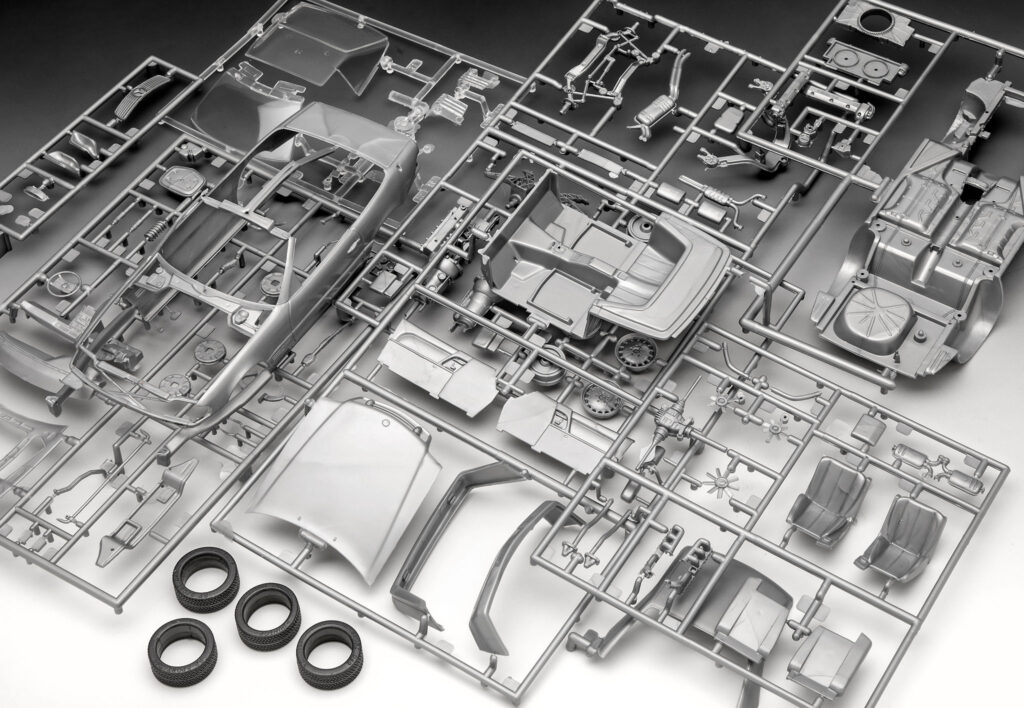
As a gift set, we’ve put this kit together so you can get started right away. Alongside the 111 individual parts, the box already includes a brush, the matching Revell Aqua Color base colours and Contacta Professional Mini glue. You don’t need any extra accessories to start building. The model is rated as challenging at Level 4 and is aimed at experienced model builders aged 12 and up who appreciate precision and attention to detail.
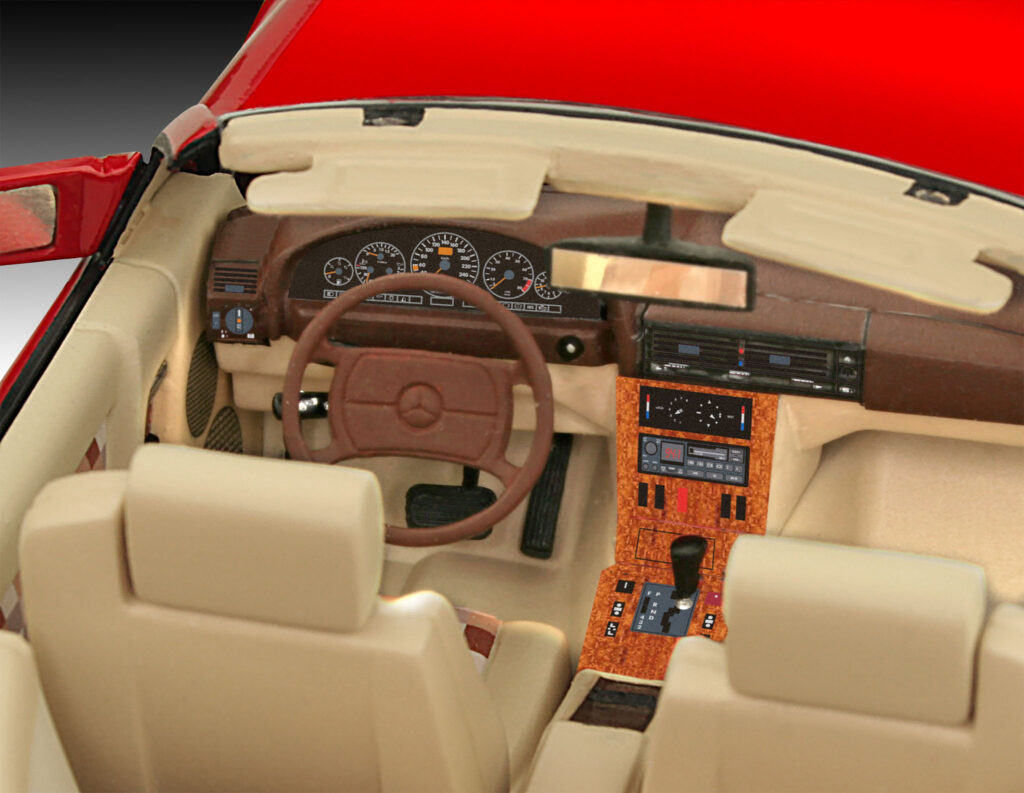
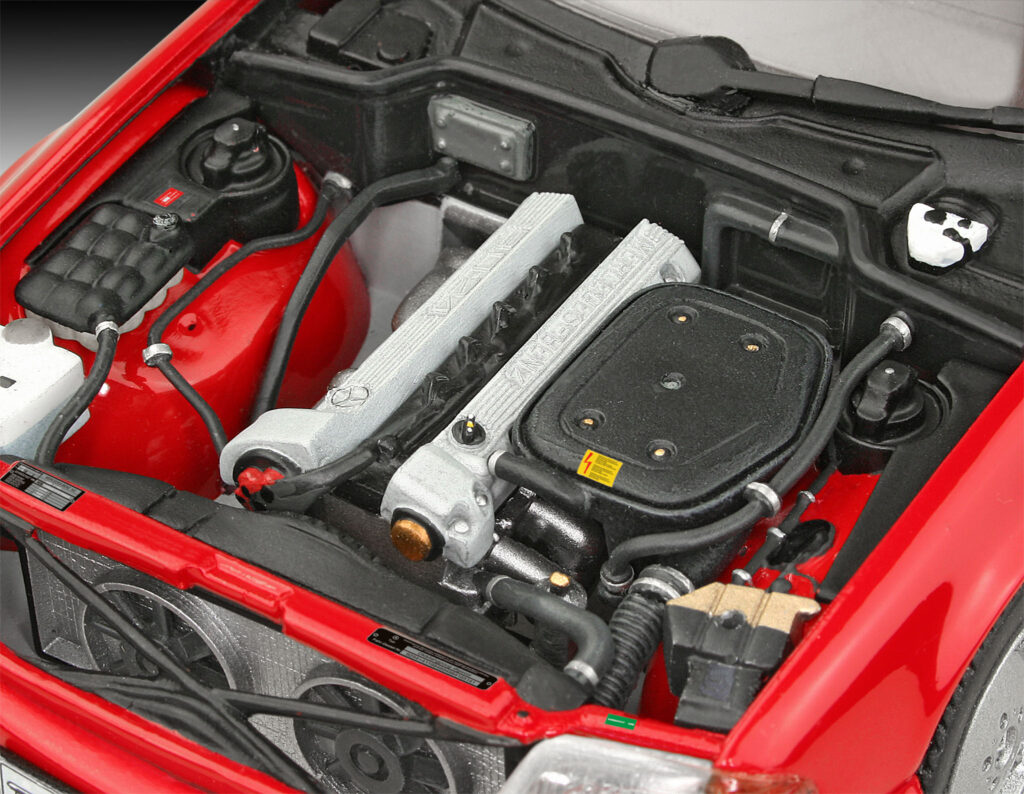
In 1:24 scale, the finished model reaches a length of 185 mm and convincingly captures the proportions of the original. The authentic body shape captures the characteristic wedge form and flowing lines of the R129 that made Bruno Sacco’s design philosophy so distinctive. The detailed interior, the carefully recreated bonnet and the decals ensure that the finished model becomes an eye-catcher in any display case.
This kit is a “reintro,” meaning it’s returning to our range after a production break. For collectors who missed out on the model previously, this is a welcome opportunity to fill a genuine gap in their collection. And for anyone who admires the R129 as a youngtimer on the road, or who has one of their own sitting in the garage, this model is an ideal addition that preserves the past and makes a passion for automotive engineering tangible.
From the Road to the Display Case: Why the R129 Is More Relevant Than Ever Today
The R129 series was produced from 1989 to 2001 and, over its twelve-year production run, achieved a diversity that ranged from the gentle six-cylinder entry-level engine all the way to the brutally exclusive SL 73 AMG with its 7.3-litre V12. Only 65 examples of the SL 55 AMG were built, and even fewer of the legendary SL 72 AMG with 525 hp. The Mille Miglia special edition launched in 1995, in Brilliant Silver with a red and black leather interior and carbon-fibre trim, commemorated Stirling Moss’s legendary victory at the 1955 Mille Miglia, with Moss personally presented with the first example of the SL 500 built.
Today, the R129 is experiencing a renaissance as a youngtimer. While prices for early examples, and especially for the rare AMG versions, have risen significantly in recent years, the 300 SL-24, as a six-cylinder model, remains a comparatively accessible entry point into the world of classic SL roadsters. At the same time, connoisseurs consider it one of the best R129s to drive, since its lower weight compared to the eight-cylinder versions and the lively character of the M104 engine offer a particularly well-balanced driving experience.
Whether you’ve driven the original 300 SL-24 yourself, know it from films and TV series, or simply appreciate it as one of the most beautiful car designs of the 20th century: our kit brings you closer to this car than any photograph ever could. As you build it, you’ll experience every detail of the bodywork, interior and technology up close, and understand why Bruno Sacco’s design hasn’t lost any of its impact even after more than 35 years.
Get the Mercedes-Benz 300 SL-24 Coupé (100 Years Mercedes-Benz), item no. 056159090 directly from our shop.
Technical Specifications at a Glance
Mercedes-Benz 300 SL-24 Coupé (100 Years Mercedes-Benz), item no. 056159090
Scale 1:24, 111 individual parts, length 185 mm, Level 4 (advanced), recommended age 12+, gift set including brush, Revell Aqua Color base colours and Contacta Professional Mini glue, authentic bodywork with decals, price 46.49 euros.