
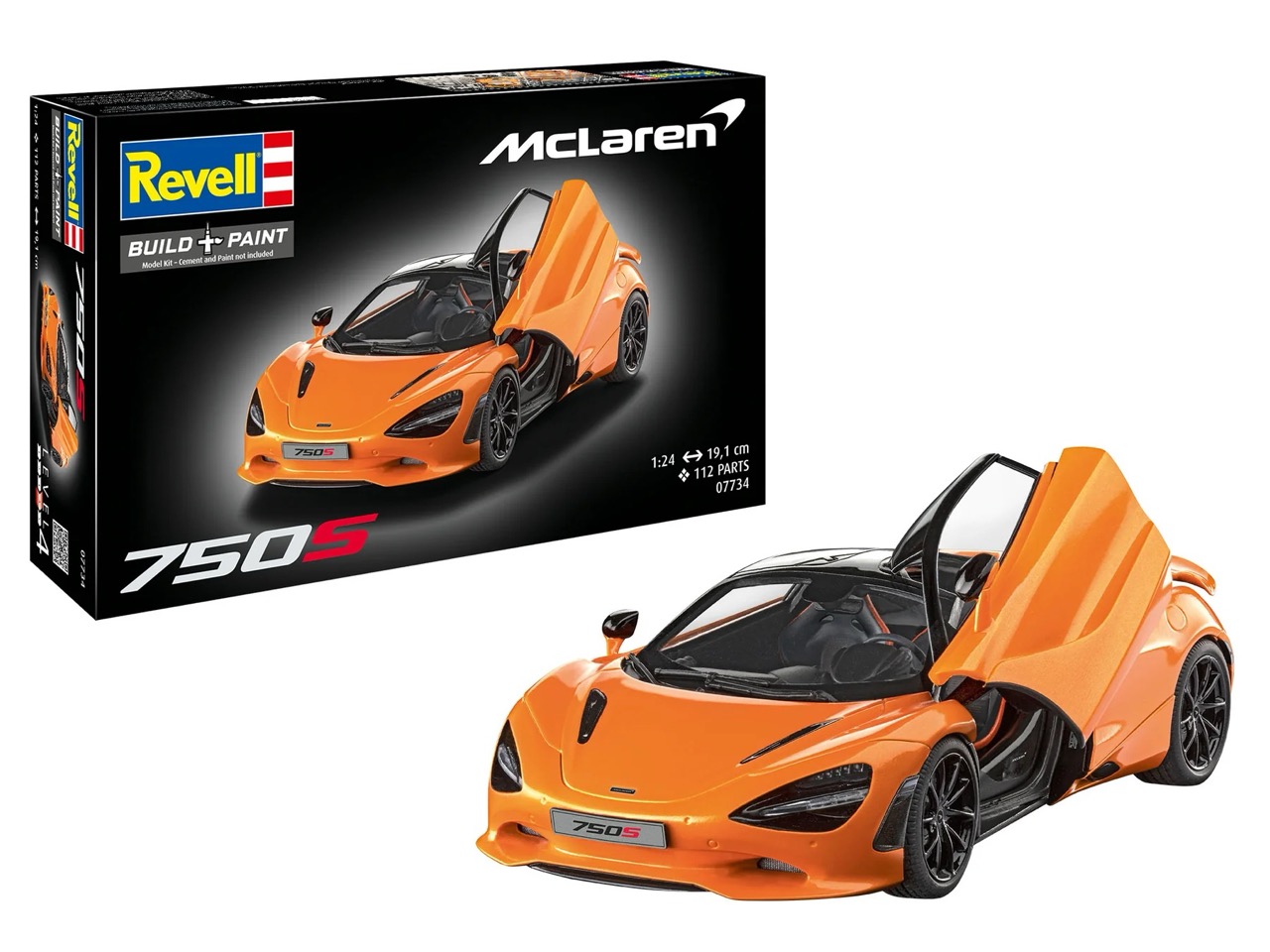
There are kits where you open the box and immediately know: this is not a weekend project you just pick up on a whim. Our Model Set of the McLaren 750S in 1:24 scale View the kit in the Revell Shop is one of those kits. Not because it is particularly difficult — Level 3 means that ambitious beginners from the age of 10 can take away real a sense of achievement. But because the car you are recreating here stands at the end of a very special era. The McLaren 750S is the last sports car the British team from Woking is sending onto the road without electrical assistance. It is the final chapter of a purist combustion engine story that began in 1966 with the Le Mans victory of a New Zealander named Bruce McLaren.

Bruce McLaren: The Man Who Started It All
McLaren Racing is a British motorsport company, founded in 1965 by New Zealand racing driver Bruce McLaren. Before building his own company, he drove for the Cooper team in Formula 1, won races, made his mark, and at some point decided he would rather build his own cars than drive those made by others. From 1966 onwards, Bruce McLaren entered Formula 1 World Championship races with his own cars.
On 2 June 1970, at 12:19 in the afternoon, Bruce McLaren left the grandstand at Goodwood circuit to test one of his McLaren M8Ds. He would not return. A rear bodywork section came loose from the car during the run, causing an immediate loss of aerodynamic stability and with it downforce. The car broke away at high speed, left the track and struck a barrier. Bruce was only 32 years old. A tragic end for a man who had changed the world of motorsport for all time. But the company he founded survived.
What followed was one of the most remarkable success stories in motorsport. McLaren is, after Scuderia Ferrari, the most successful team in Formula 1 history, and alongside Mercedes-Benz the only constructor of both racing and road cars to be listed as a winner at the Monaco Grand Prix, the Indianapolis 500 and the 24 Hours of Le Mans.
Le Mans 1995: The Moment That Changed Everything
The 24-hour victory at Le Mans in 1995 remains to this day the most spectacular chapter in the history of McLaren’s road sports cars. In June 1995, McLaren prevailed in driving rain. In its debut as a manufacturer, the team entered a production car against Le Mans prototypes and astonished the world: the overall victory and four of the five top positions went to McLaren.
The F1 GTR thereby secured its rightful place in the McLaren hall of fame. To this day, its legacy reaches far beyond that legendary 24-hour race. This moment was the birth of a myth that every McLaren carries with it to this day — including the 750S you are building here. Our founder Bruce McLaren competed in the 24 Hours of Le Mans eight times and won on his sixth attempt in 1966 at the wheel of a Ford works car. Between these two Le Mans moments lies the true DNA of the brand.
The McLaren F1: The Car That Paved the Way for the 750S
The McLaren 750S would be unthinkable without a predecessor that turned the automotive world upside down in the 1990s: the McLaren F1. The McLaren F1 is a supercar built 106 times by McLaren Automotive between 1993 and 1997, powered by a twelve-cylinder engine from BMW.
The F1 had one particularly distinctive feature that made it perhaps the most unconventional supercar of all time: a centre seat. The driver sat centrally, with one passenger on either side. Gordon Murray, the brilliant engineer behind the car, wanted to build a vehicle in which the driver is quite literally at the centre of everything. The result was a driving experience that remains unmatched to this day. And the F1 holds a remarkable anecdote to this day: in 1995, the then BMW CEO Bernd Pischetsrieder wrote off a McLaren F1 during a private drive on a Bavarian country road near Rosenheim, losing control in a fast corner. All parties involved maintain strict silence about the speed at the time of the accident. That really says everything about what this car did to its drivers.
Another F1 owner who came to public attention: Rowan Atkinson, better known as Mr. Bean, was involved in not one but two accidents with his McLaren F1. The second time, in 2011, the insurer repaired the car for a reported sum of more than 900,000 pounds, making it at the time the most expensive insurance repair of a private vehicle in British history. That too is McLaren history.
The 750S: The End of an Era at Its Peak
In 2023, McLaren revised the models in its Super Series, and the result is called the 750S. Around 30 percent of the components are said to have been either newly developed or modified. On the outside, the 750S looks deceptively similar to its predecessor the 720S, but underneath and inside, McLaren has made consistent improvements throughout.
The output figures of the four-litre twin-turbocharged V8 rise to 750 hp and 800 Nm of torque. The rear-wheel-drive McLaren 750S completes the sprint from zero to 100 km/h in 2.8 seconds, 200 km/h is reached after 7.2 seconds, and 300 km/h after 19.8 seconds. McLaren quotes a top speed of 332 km/h.
But perhaps the most decisive detail is the weight. The McLaren 750S continues to be built around a carbon monocoque, ensuring maximum torsional rigidity alongside a low kerb weight: the coupé tips the scales at a DIN weight of just 1,389 kg, shedding a further 30 kg compared to its predecessor. In an era when cars are getting ever heavier, McLaren is taking weight away. That is the philosophy behind every vehicle from Woking, from Bruce McLaren’s first racing cars to the model that will soon be standing on your workbench.
The McLaren 750S is the lightest and most powerful series-production McLaren of all time. With a remarkable breadth of capability that accepts no compromises. Shaped by innovation and experience forged and refined in Formula 1.
And then there is one detail that secures a very special place in McLaren history for this model: the 750S is the last McLaren to go to the start line without electrification. Whoever builds this kit is recreating the finale of an era. A car that still fully commits to the purist ethos that Bruce McLaren once carried into a garage in Woking.
Unboxing the Kit
View now in the Revell Shop
Our Model Set of the McLaren 750S comes as a New Tool kit. That means: freshly engineered moulds, state-of-the-art injection moulding technology and a parts fit you will feel the moment you first test-assemble the components. With 100 individual parts in 1:24 scale, the finished model makes a genuine impression on the shelf. The completed model measures approximately 19 centimetres in length, giving you a very tangible sense of how compact and yet athletic the proportions of the real 750S actually are.
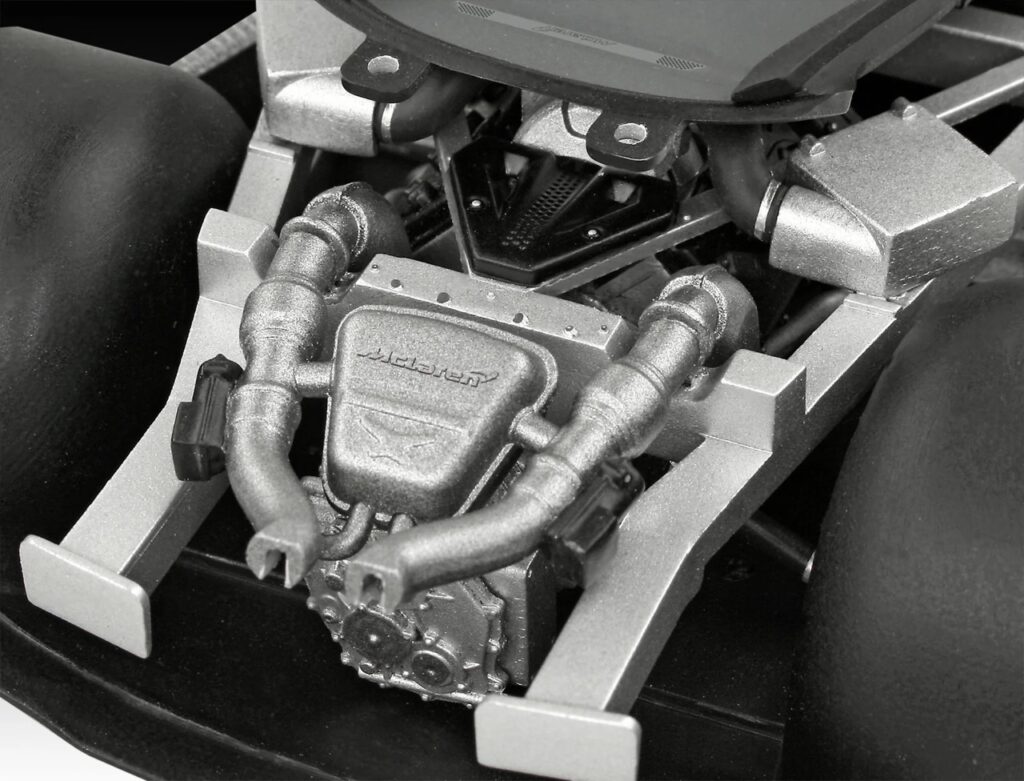
The centrepiece of the kit is its V8 engine, rendered in multiple parts and designed to be assembled in fine detail. As you put together the individual engine components, you get a very real sense of how McLaren’s engineers achieve the seemingly impossible task of extracting 750 hp and 800 Nm from an engine that remains light and compact throughout. On the real car, the engine is visible through a window in the luggage compartment — and in the model too it is a feature that speaks for itself.
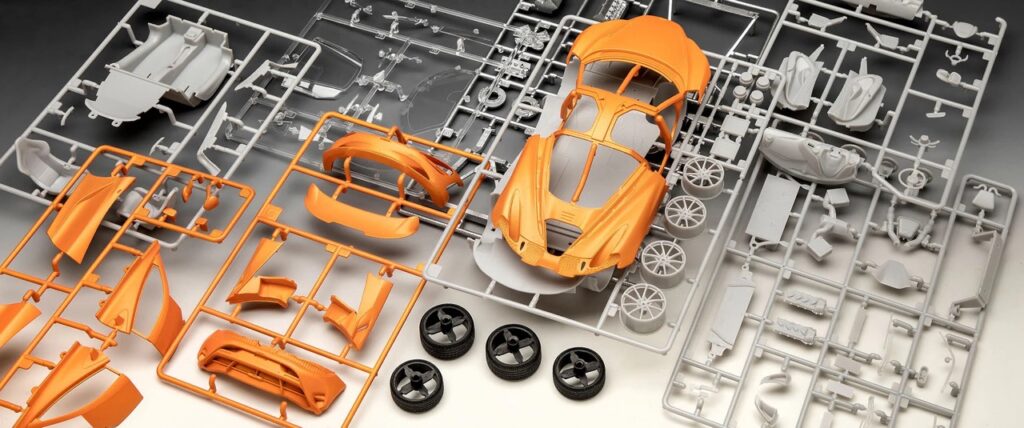
Thanks to the steerable wheels, you can pose the finished model exactly as you like, turning the front wheels to create dynamic angles that bring the finished display piece to life. This is a detail that makes a real difference when photographing the completed model.
As a Model Set, all the necessary supplies are included: Aqua Color paints in the correct shades, a brush and Contacta Professional Mini glue. You can get started straight away, without having to search the hobby room for the right accessories. The set is aimed at everyone from the age of 10 upwards who enjoys model building and wants a modern supercar with genuine substance standing in their display cabinet.
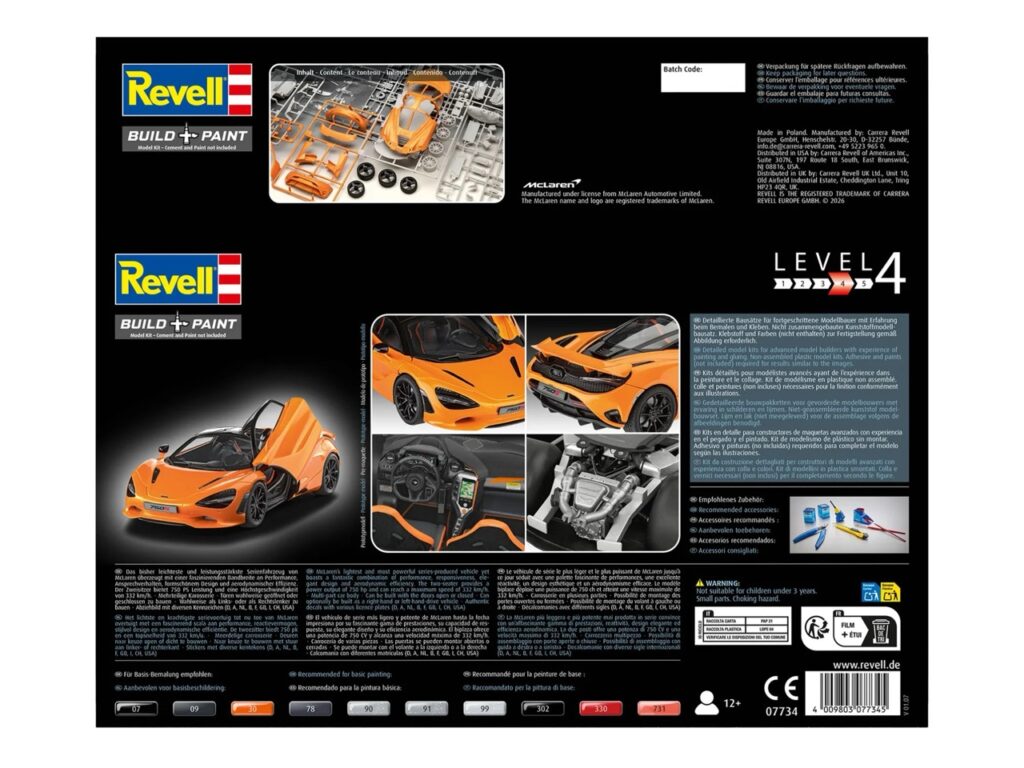
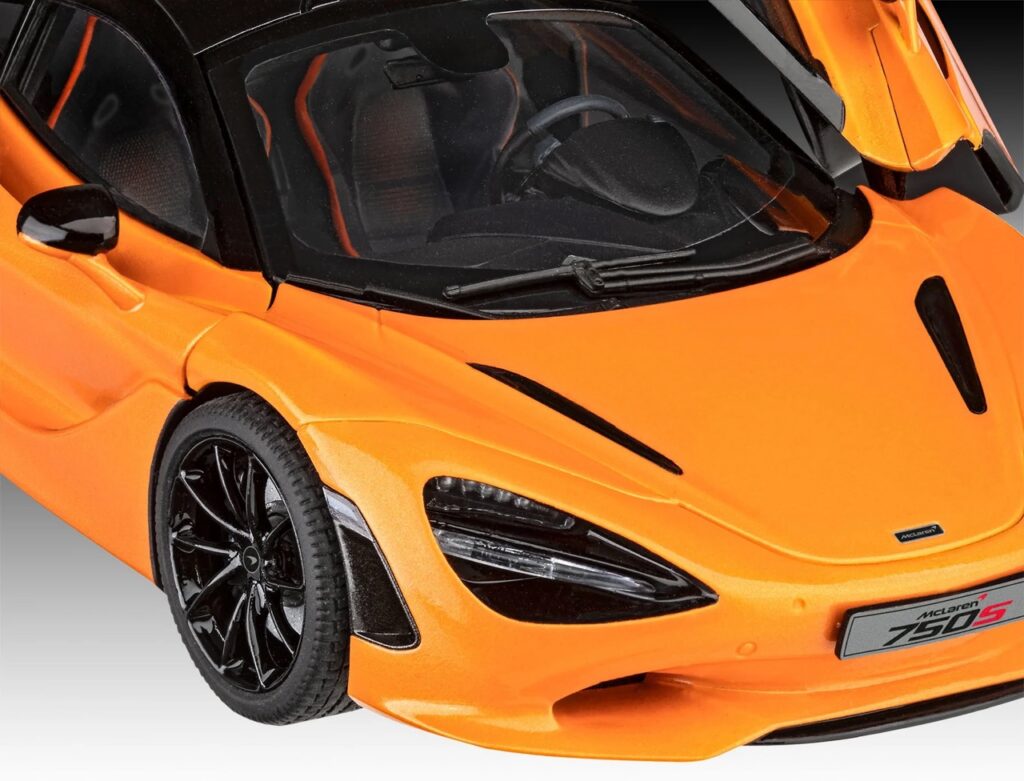
The colour choice is entirely up to you. Papaya Orange is historically the most significant colour of the brand: when painting the monocoque, pay close attention to a thorough primer coat so that the colour goes on evenly and the flowing lines of the bodywork come through in their full elegance.
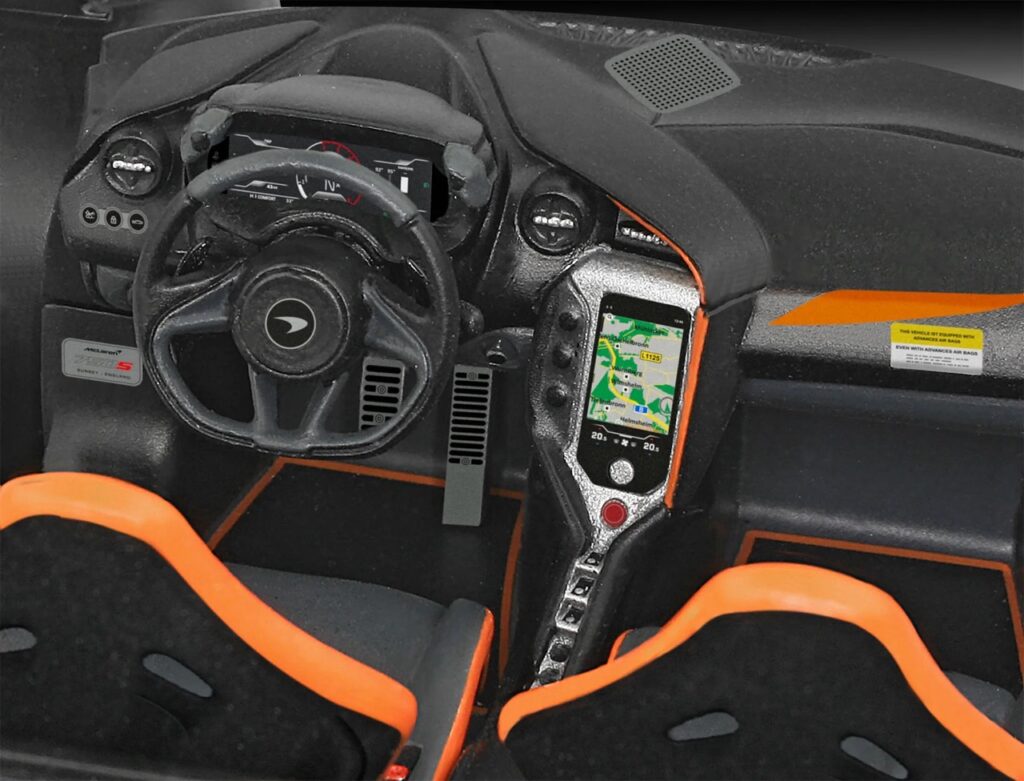
The cockpit of the real 750S is entirely driver-focused: an Alcantara-wrapped steering wheel free of controls, carbon bucket seats, a minimalist display. In the model too, it is worth giving the interior special attention. A carefully painted cockpit, visible through the clear parts, is what separates a well-built model from a truly outstanding one.
Order the McLaren 750S Model Set in the Revell Shop now