
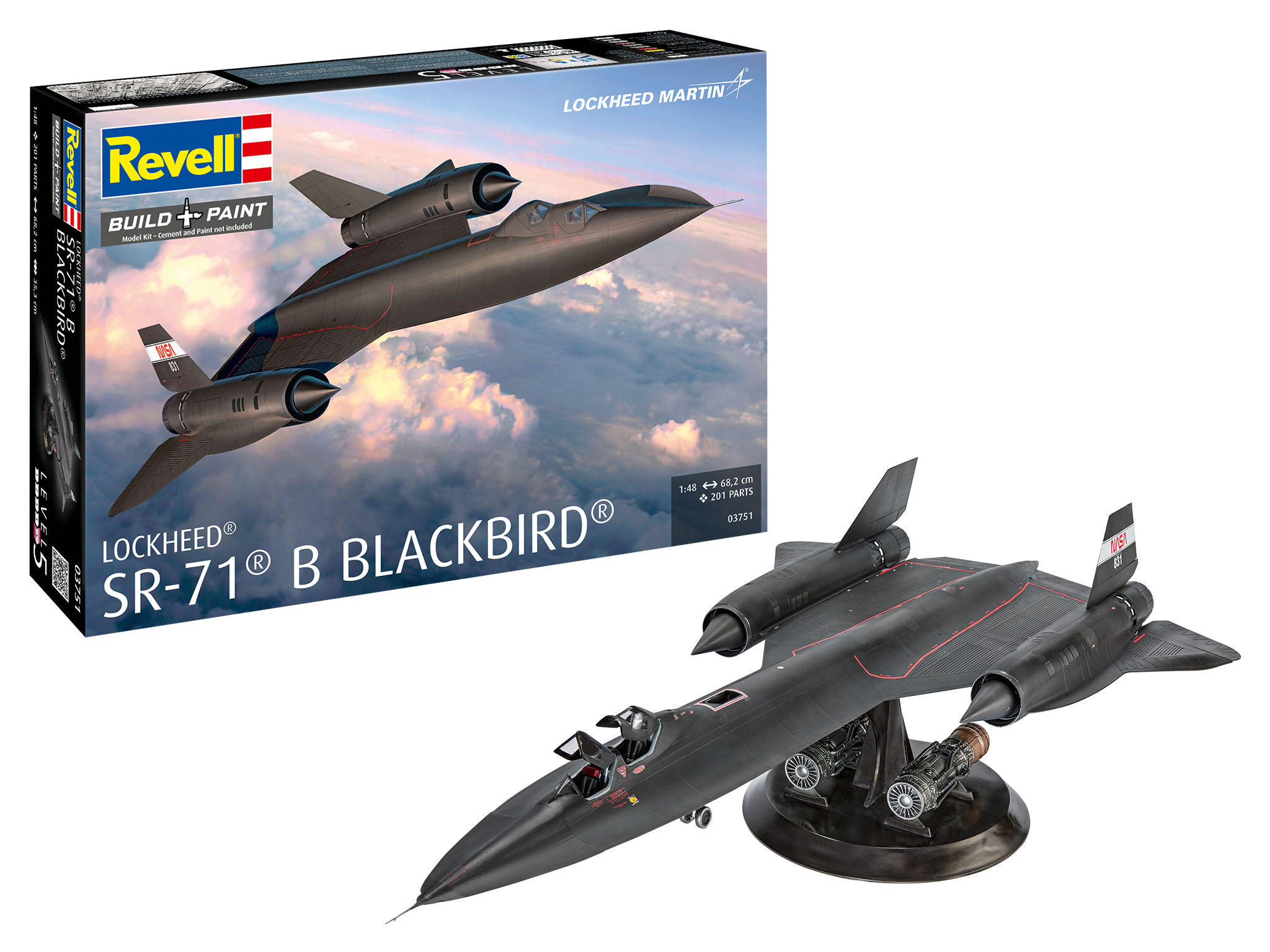
There are aircraft that are fast. There are aircraft that fly high. And then there is the SR-71 Blackbird, which pushed both so far beyond the known at the time that its records remain unbroken to this day. In 1974, the SR-71 set the record for the fastest flight from London to New York in 1 hour, 54 minutes, and 56 seconds. In 1976, it became the fastest air-breathing, manned aircraft ever, and this title remains unbroken to this day.
Direct to the model kit in the Revell Shop
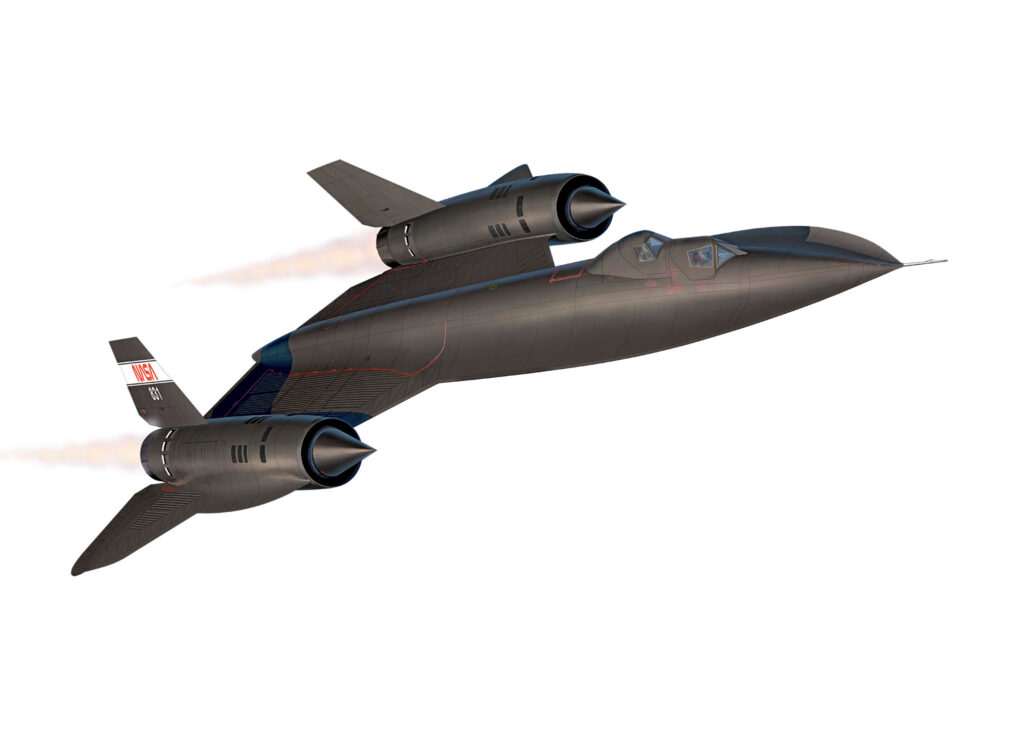
Kelly Johnson and Skunk Works: How the Blackbird Was Created
The SR-71 was developed in the 1960s as a secret Black Project by Lockheed’s Skunk Works division. Aerospace engineer Clarence „Kelly” Johnson was responsible for many of the innovative concepts. Its shape was based on the Lockheed A-12, a pioneer of stealth technology with reduced radar cross-section, but the SR-71 was longer and heavier to carry more fuel and a two-man crew in tandem cockpits. What his team developed was revolutionary in every respect: The aircraft consisted of 85 percent titanium alloys and polymer composite materials to withstand the heat of sustained Mach-3 flight.
The SR-71 was conceived when tensions with communist Eastern Europe in the mid-1950s reached a near-crisis level. US military commanders urgently needed accurate situational pictures of Soviet troop deployments. When the U-2 was shot down over the Soviet Union in 1960, it was clear: No slow reconnaissance aircraft was safe anymore.
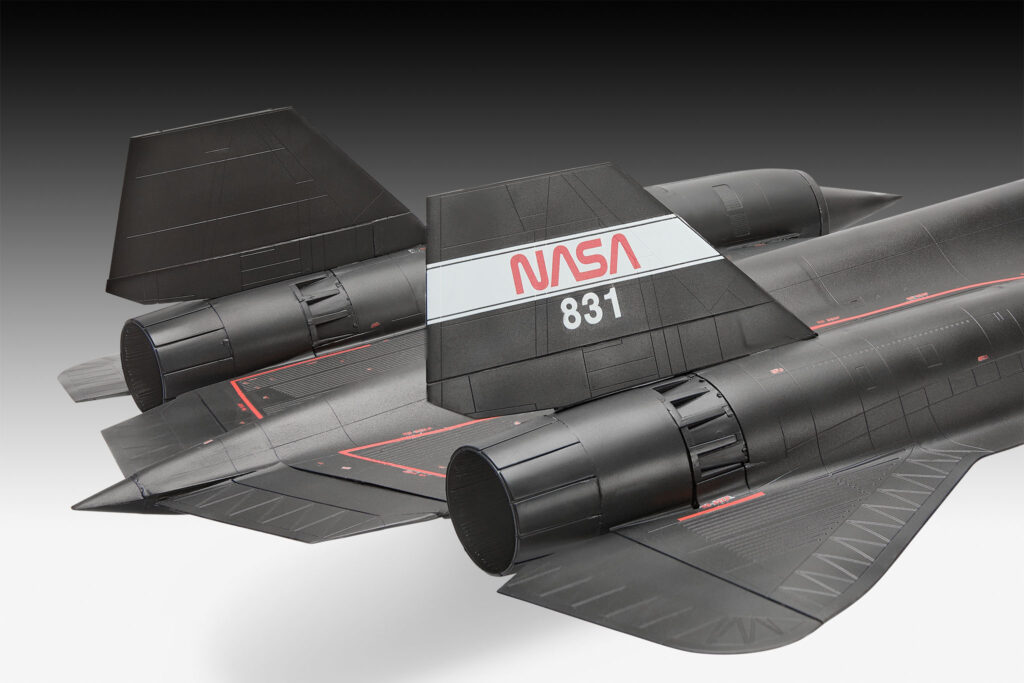
The SR-71B: The Trainer Piece
Including the SR-71C and the two SR-71B training aircraft, Lockheed built a total of 32 Blackbirds. The B variant differs externally by a raised rear cockpit for the trainee pilot. Only 93 Air Force pilots were qualified as „Sled Drivers” throughout the program’s history. They underwent an extreme selection process that included passing an astronaut fitness examination, evaluation flights in the T-38 with an instructor, and an interview with the wing commander. This was followed by a ten-month training program before a pilot was considered operational.
Habu: The Snake in the Sky
When the Blackbirds were stationed on Okinawa in the 1970s and flew over the island, excited Japanese civilians pointed to the sky and shouted „Habu! Habu!” The sightings reminded them of the native black pit viper of the island. As the legend grew, pilots and crew members began calling themselves „Habus”.
Over their entire service life, the SR-71 Blackbird evaded nearly 4,000 fired missiles. The North Vietnamese forces fired about 800 surface-to-air missiles at the Blackbird, but none scored a hit. Pilots reported that radarless-fired missiles sometimes approached the aircraft to within 140 meters without hitting it.
The NASA Phase: From Spy Tool to Flying Laboratory
In the 1990s, two SR-71 Blackbird aircraft were used as testbeds for high-speed and high-altitude aeronautical research at the Dryden Flight Research Center. The aircraft, an SR-71A and the SR-71B as trainer version, were loaned to NASA by the US Air Force. On July 25, 1991, the SR-71B, AF Ser. No. 61-7956, was officially handed over to the Dryden Flight Research Center as NASA 831.
The extreme operating environment in which they flew made the aircraft excellent platforms for research and experiments in various fields: aerodynamics, propulsion, structures, thermal protection materials, high-speed and high-temperature instrumentation, atmospheric studies, and sonic boom characterization.
One of the first major experiments in the NASA SR-71 program was a laser air data system that used laser light instead of air pressure to generate flight speed and attitude data. Another project used the SR-71 as a science camera carrier for NASA’s Jet Propulsion Laboratory in Pasadena: An upward-facing ultraviolet video camera in the nose bay investigated a variety of celestial bodies in wavelengths blocked for ground-based astronomers by the atmosphere.
In 1997 and 1998, the SR-71 carried the Linear Aerospike SR-71 Experiment, or LASRE. The test setup was a half-span scale model of a lifting body with eight thrust chambers of a linear aerospike engine mounted on the back of the aircraft. The aircraft equipped with the test carrier functioned like a flying wind tunnel and enabled engineers to collect aerodynamic data under real flight conditions.
Discover the SR-71B model kit now in the Revell Shop
Marta Bohn-Meyer: A Historic Moment
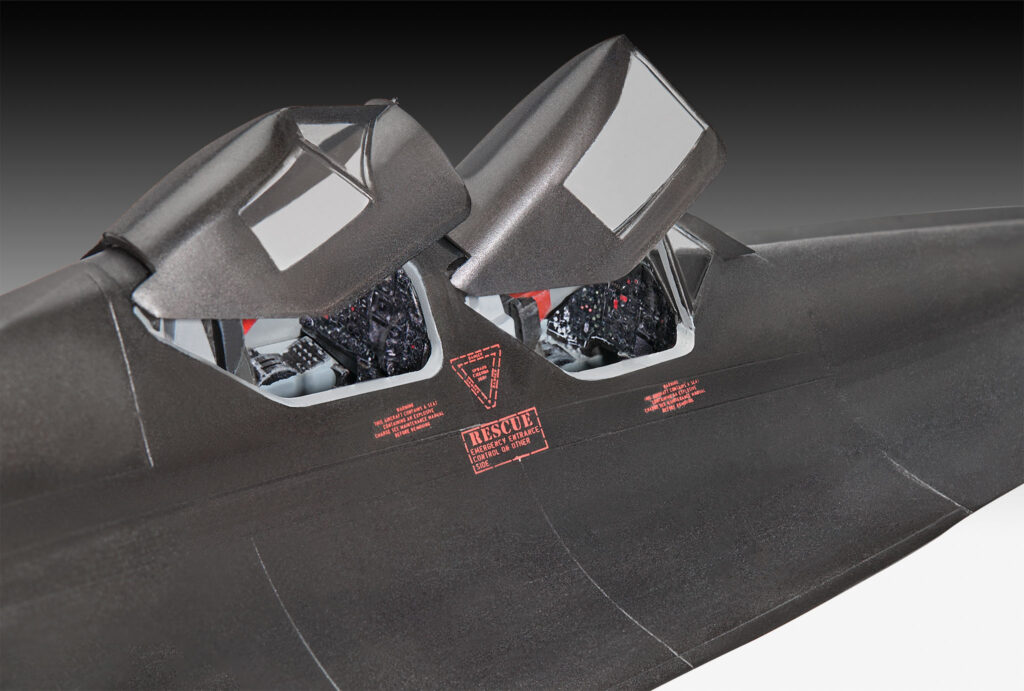
In October 1991, Marta Bohn-Meyer, aerospace engineer at the Dryden Flight Research Center, became the first female crew member to ever join an SR-71 crew. Bohn-Meyer had been at Dryden since 1979 and flew as flight engineer in the two-seat SR-71B. The raised rear cockpit of the B variant, that characteristic feature that distinguishes our model kit from the A version, was the position from which research tasks were coordinated.
From Secret Files to Top Gun
Although the SR-71’s existence in cinema is mainly continued through its legacy, a direct reference in „Top Gun: Maverick” from 2022 was particularly prominent: The fictional hypersonic experimental aircraft „Darkstar” was designed in close collaboration between the film production and Lockheed Martin Skunk Works. According to reports, the similarity was so convincing that a Chinese spy satellite was aligned on the film props on the ground to better investigate the supposed secret aircraft.
Documentarily, the aircraft has been honored many times: The 1989 TV documentary „SR-71 Blackbird: The Secret Vigil” and the episode on the Blackbird in the 2015 series „Planes That Changed the World” made the program accessible to a broad audience. In book literature, Richard Graham’s „SR-71 Blackbird: Stories, Tales, and Legends” stands out, which lets the rarest pilot community in aviation history speak in their own words: Men who flew the 25-ton aircraft at 80,000 feet altitude and 33 miles per minute.
The End That Was No End
The SR-71B chassis 61-7956, NASA 831, is today exhibited at the Air Zoo Museum in Portage, Michigan. It is the only SR-71B original ever built that has survived. The second example was destroyed in an accident in 1968, making the SR-71B the rarest Blackbird variant ever. Anyone building the model in NASA paint is recreating the history of a single, real documented aircraft.
Your Model Kit at a Glance
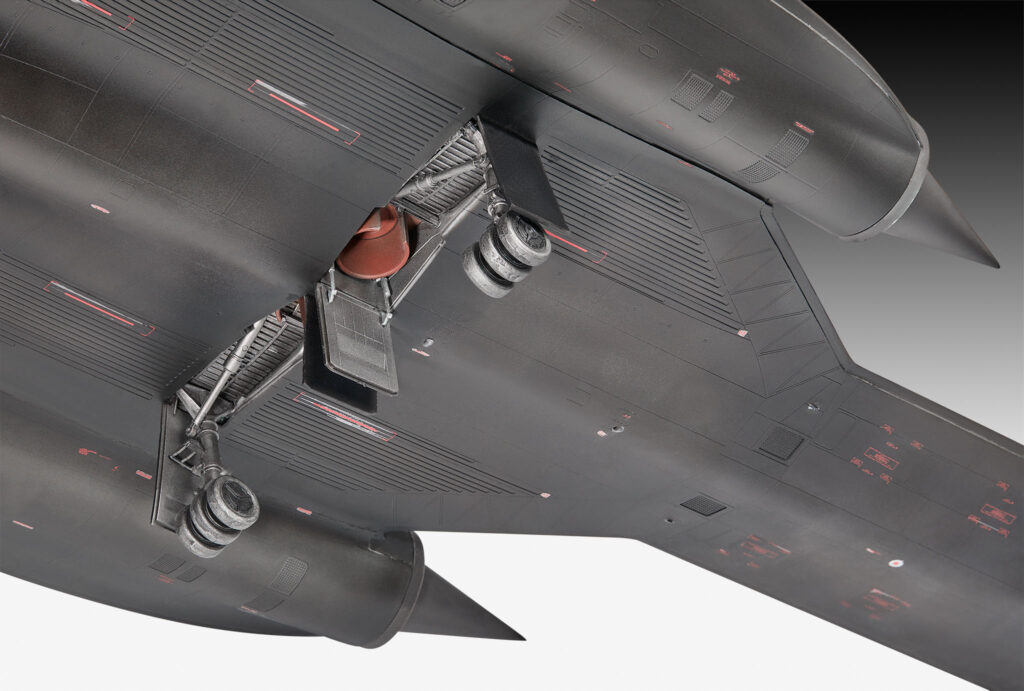
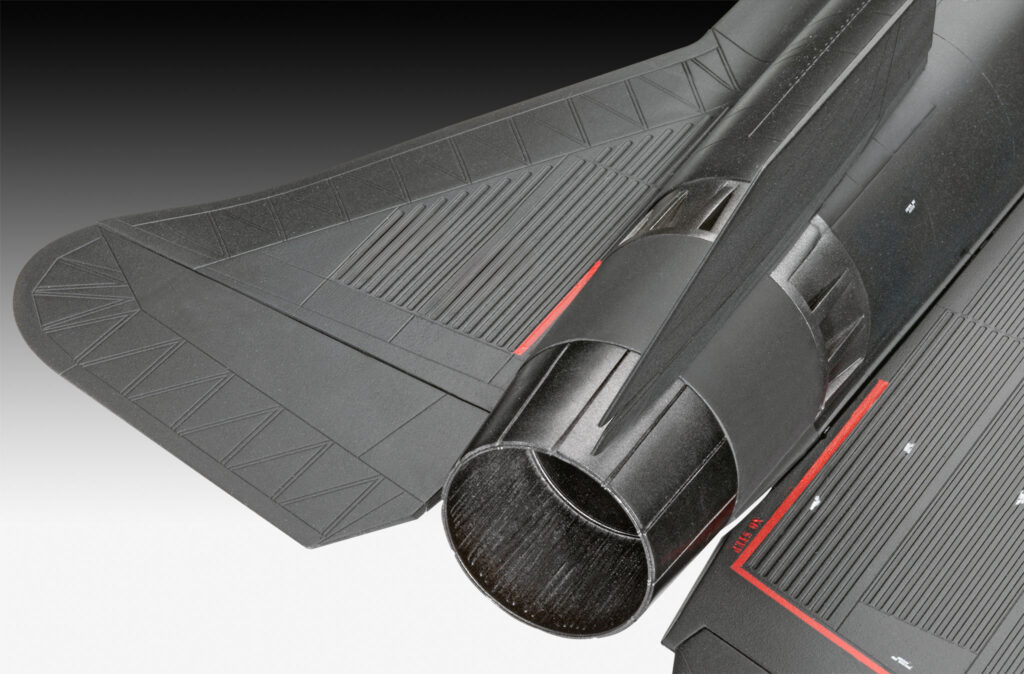
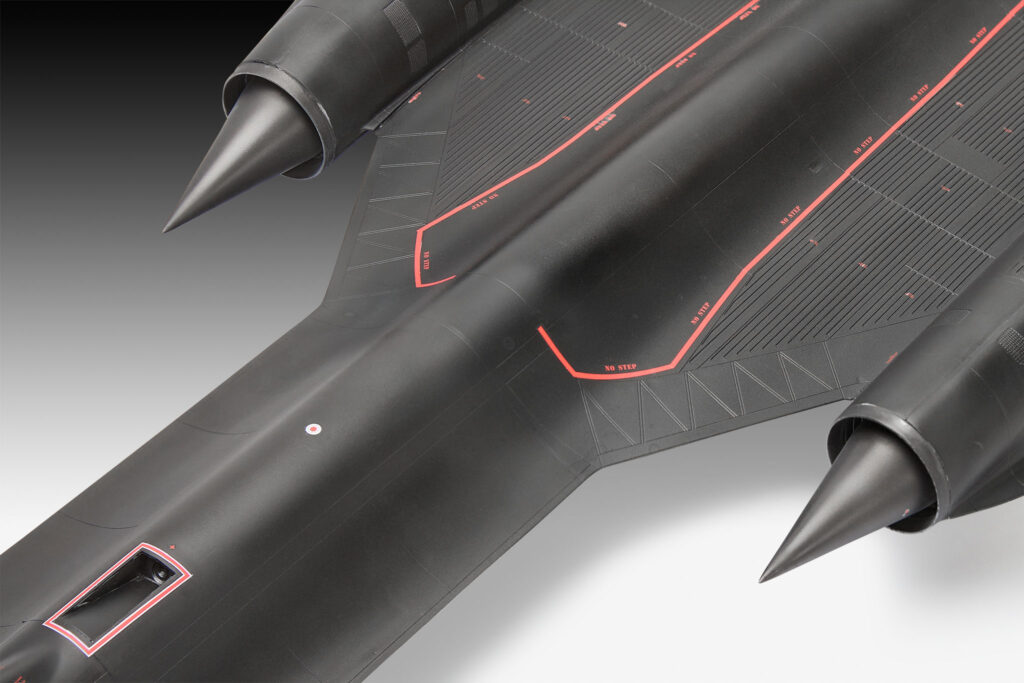
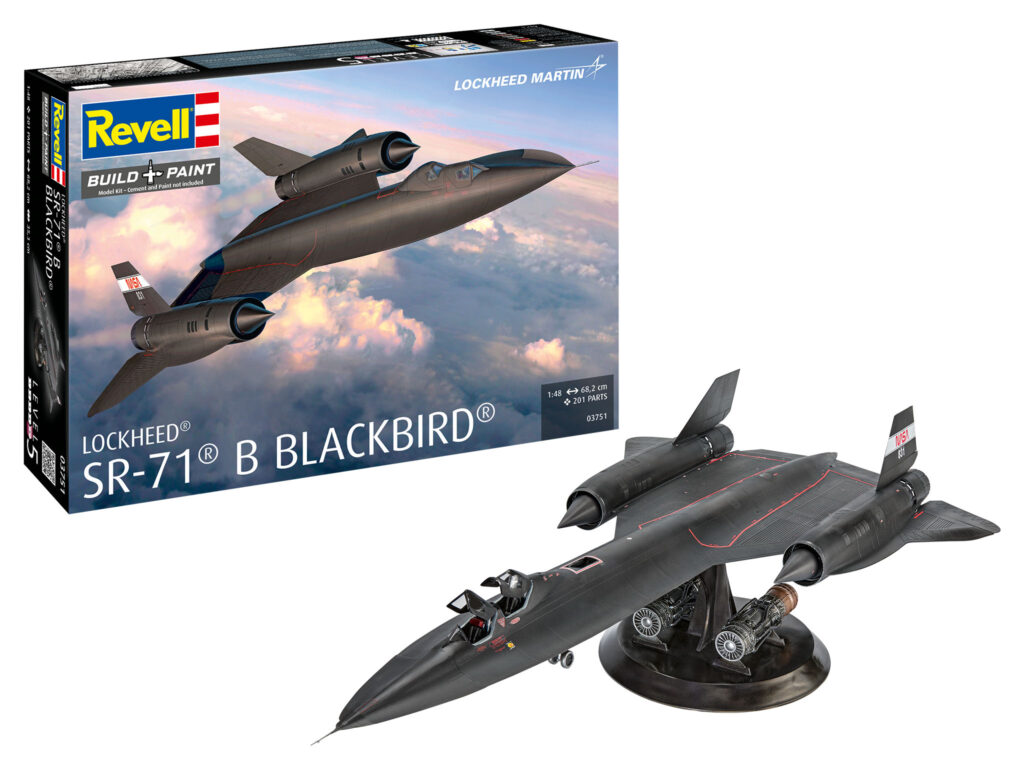
The finished model in 1:48 scale consists of 206 individual parts and has a length of 68.2 cm and a wingspan of 35.3 cm. Due to its size and high level of detail, the difficulty level is Level 5 with an age recommendation from 13 years.
The decals allow for either NASA or USAF paint schemes. Engines and landing gear can be displayed in several configurations on the included display stand.
Order the Lockheed SR-71B Blackbird NASA in the Revell Shop now
 Building Inspirations
Here Sr71- A, B, and C are compared
Aerial refueling in flight