
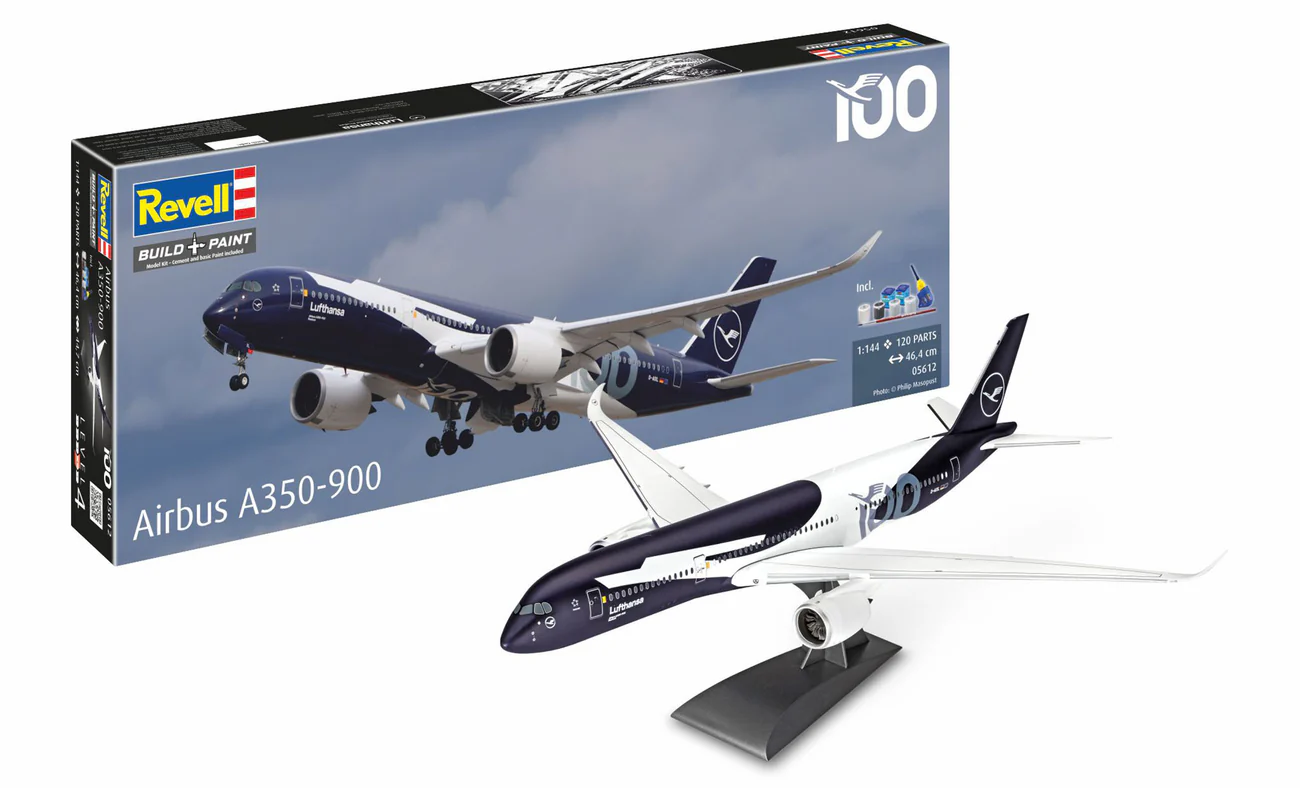
There are moments in the history of model building when a kit is more than the sum of its 120 parts. Our anniversary model of the Airbus A350-900 in the special livery marking Lufthansa’s 100th anniversary is one of those moments. Whoever holds this kit in their hands receives not only plastic sprues and a decal sheet, but also a living piece of civil aviation history that moves between era, zeitgeist and eyewitness account. Here we take you behind the scenes of the kit, the original aircraft, and a century of civil aviation that began with a yellow crane on a blue background and lives on today in the form of an oversized white Super Crane on a midnight blue fuselage.
6 January 1926: The Day It All Began
On 6 January 1926, the first Deutsche Luft Hansa AG was founded in Berlin through the merger of Deutsche Aero Lloyd AG and Junkers Luftverkehr AG. Both predecessor companies were struggling with the same problems at the time: they were chronically loss-making and simply could not survive without government subsidies. The merger was therefore less a romantic new beginning than an economic necessity, yet it opened a door through which German aviation then truly stepped into a new era.
The first flight from Berlin-Tempelhof to Zurich took place as early as 6 April 1926. That may sound unremarkable today, but at the time it was a minor sensation. Scheduled services from Tempelhof had existed since 1923, and Luft Hansa commenced its flight operations in April 1926. The chosen logo was a yellow crane on a blue background. The aircraft of that era came from Junkers, Fokker and Heinkel, and flying was still far removed from what we know today: loud, cold, uncomfortable, and an unattainable luxury experience for most people. Nevertheless, Luft Hansa developed within just a few years into a serious international airline, operating routes to Paris, Moscow and Venice.
The company name is a tribute to the Hanseatic League, the medieval association of Low German merchants. The Old High German word “Hansa” means “band” in the sense of a group. The name was actually coined not in Berlin but in Dresden. In the summer of 1924, the name for the planned new airline was used for the first time at a celebration in Dresden’s city hall marking the opening of the Dresden–Munich air route. A name that would become one of the world’s best-known brand identities was born at a reception in a Saxon town hall.
The Crane: 108 Years Old and Still the Mightiest Symbol in German Aviation
Anyone who knows Lufthansa knows the crane. But how many people actually know that this symbol is considerably older than the airline itself? The crane as a symbol dates back to 1918, when graphic artist and architect Otto Firle designed a new logo for Deutsche Luft-Reederei. Firle chose the crane as his motif because it stood for elegance, speed and reliability. He drew the bird in a stylised form reminiscent of the aircraft of the day.
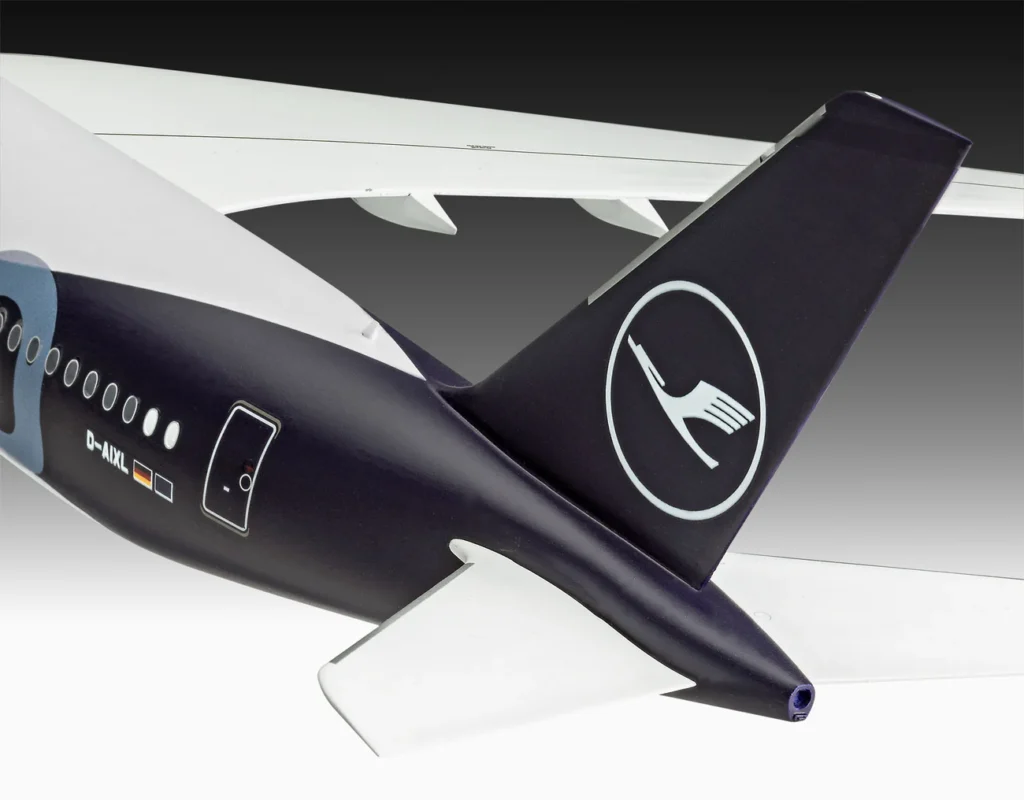
As early as 1918, Otto Firle had created for Deutsche Luft-Reederei the crane logo that the Deutsche Luft Hansa AG, founded in 1926, would make internationally famous – and which remains so to this day. When Luft Hansa was founded in 1926, it adopted this symbol virtually unchanged. Over the past 100 years, the crane has become an unmistakable corporate identity and the symbol of the Lufthansa brand. It stands around the globe for competence, openness and quality, inspiring trust and goodwill.
It is a remarkable constant in the often turbulent history of the company: wars, refoundings, political upheavals, insolvencies, mergers and pandemics have all failed to make this stylised bird disappear. The crane within a circle is one of the few logos in the world that can be described in a single word and instantly conjures up an entire company.
A Fresh Start After the War and the Second Birth
The history of Lufthansa is not a straight line. Between 1933 and 1945, the airline – by then renamed Deutsche Lufthansa AG – was required to fly under the Nazi flag. After the end of the Second World War, the company was dissolved. On 6 January 1953, LUFTAG was founded with the participation of the Federal Republic of Germany, Deutsche Bundesbahn and the state of North Rhine-Westphalia. On 17 September 1954, LUFTAG acquired the trademark rights of the old Deutsche Lufthansa AG, including the crane logo and flag, for 30,000 Deutschmarks. The crane thus literally flew into the new era, purchased for a sum that today would barely raise an eyebrow.
With the re-establishment of Lufthansa in 1953, the legal foundation of today’s company was created. Flight operations resumed in 1955. Today, in 2026, Lufthansa is the largest airline in Europe outside the United States. 40,000 people from 122 nations work for the crane, and 100,000 people from more than 160 nations work for the Group.
The Anniversary Year 2026 and the Blue Fleet with the Super Crane
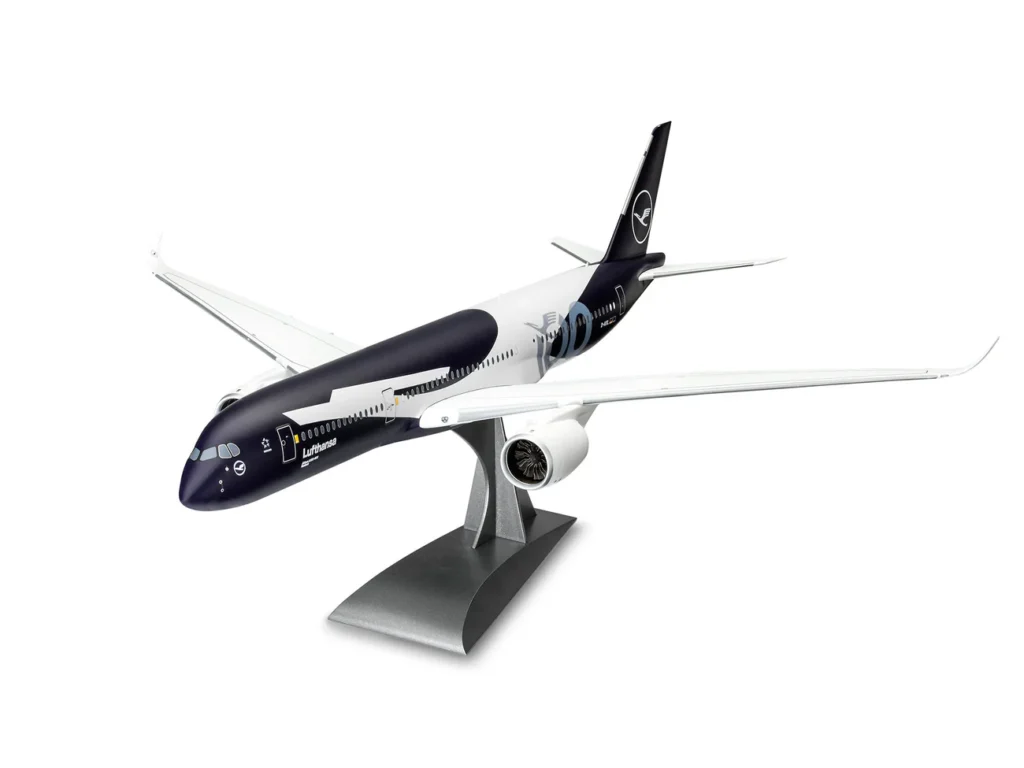
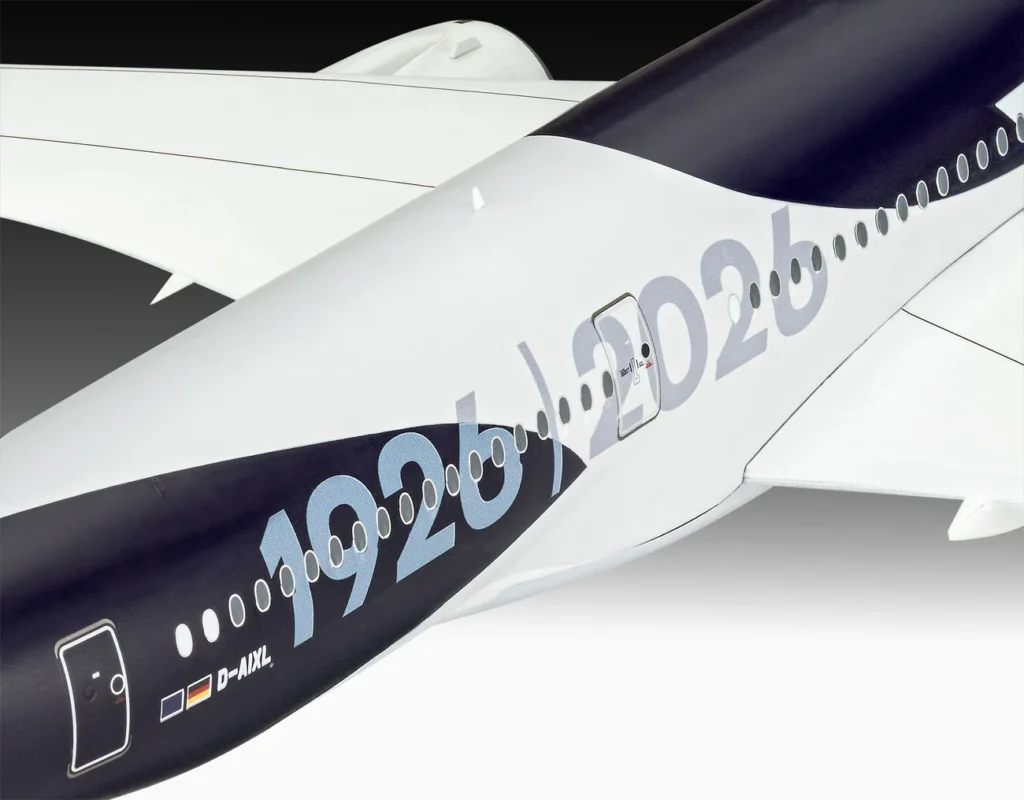
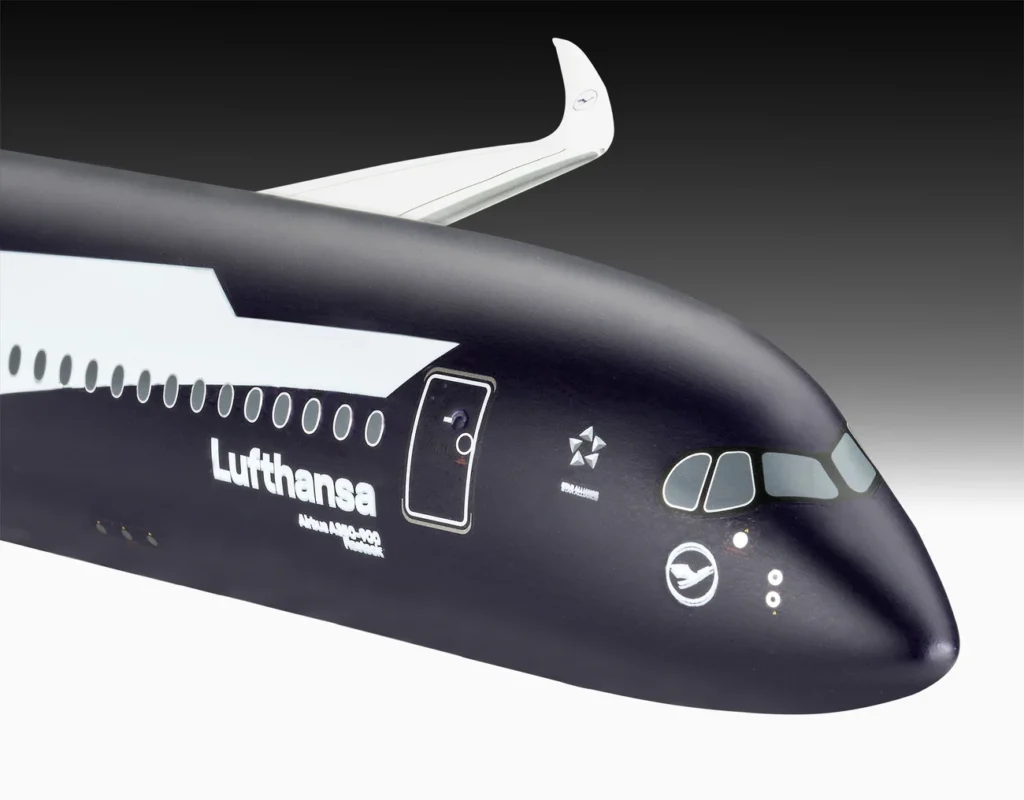
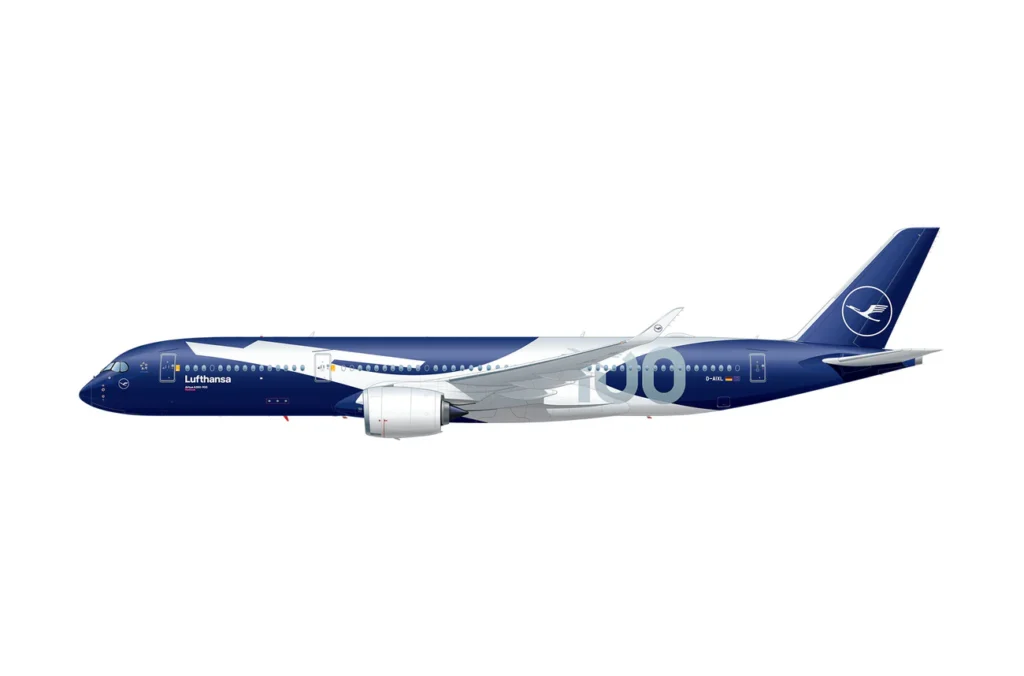
A centenarian doesn’t celebrate quietly, and Lufthansa is no exception. The visual centrepiece of the Lufthansa anniversary design is a deep blue fuselage dominated by a white crane. The crane’s wings extend stylistically into the aircraft’s wings, giving the livery a particularly dynamic appearance. The design is complemented by the number “100” on the left side of the fuselage and the lettering “1926 | 2026” on the right. Even the underside of the aircraft bears the anniversary number.
One Boeing 787-9, one Airbus A380, one Airbus A350-1000, one Airbus A350-900, one Boeing 747-8 and two Airbus A320neos are all part of the planned Lufthansa anniversary fleet and will receive the special livery. The anniversary fleet is expected to be complete by autumn 2026.
And then there was 6 April 2026. Exactly 100 years after the first departures of Luft Hansa from Berlin-Tempelhof airport, Lufthansa recreated this founding moment in its own unique way. From its hubs in Frankfurt and Munich, two long-haul aircraft departed on Monday morning bound for the capital: a Boeing 787-9 from Hesse and an Airbus A350-900 from Bavaria. Both wore the blue special livery with the white XXL crane.
The Dreamliner D-ABPU headed to Zurich, while the Airbus D-AIXL flew to Cologne. Along the way, both aircraft passed over the intermediate stops that the original flights of 6 April 1926 had used: LH1926 flew from Berlin via Halle, Erfurt and Stuttgart to Zurich, while LH2026 flew from Berlin via Magdeburg to Cologne. A hundred years on, of course without actually landing, instead tracing those historic points as waypoints in the air. Tickets for the two special flights sold out within just a few days.
The Original Up Close: D-AIXL and Its Special Story
The aircraft that serves as the model for our kit is no anonymous production-line example. D-AIXL has a very specific story that became especially vivid during the anniversary year 2026. The A350-900 with registration D-AIXL received its 100th anniversary special livery at the paint facility in Châteauroux, France.
The dark blue Airbus A350 with its oversized crane – part of the special fleet scheduled to be complete by autumn 2026 – landed for the first time at Munich Airport on 2 February 2026. D-AIXL carries the XXL crane and, as a modern long-haul aircraft, represents the halfway point in the planned anniversary fleet. The aircraft is based in Munich, where spotters can get a particularly good view of it from the Terminal 2 observation deck.
The Airbus A350-900: Why This Aircraft Is a Worthy Anniversary Model
The Airbus A350-900 is not the centrepiece of the anniversary fleet by coincidence, and nor is it the centrepiece of our kit by coincidence. It represents the very best that long-haul aviation has to offer today. The Airbus A350 is a twin-engine wide-body long-haul aircraft from European manufacturer Airbus, and the commercial aircraft with the highest proportion of carbon fibre reinforced polymer in its fuselage and wing structure.
The A350-900 made its maiden flight on 14 June 2013 in Toulouse. The first delivery went to launch customer Qatar Airways on 22 December 2014, and the type entered commercial service on 15 January 2015 on the Doha to Frankfurt route. It is a pleasing irony of aviation history that the very aircraft with which the A350 era commercially began flew to Frankfurt – Lufthansa’s historic hub.
The A350-900 seats 314 passengers in a three-class cabin and has a range of 15,000 km. The base variant of the Airbus A350 measures 66.89 metres in length and has a wingspan of 64.75 metres. These dimensions are reflected in the model: in 1:144 scale, our completed kit measures an impressive 464 mm in length and 447 mm in wingspan. Anyone who has the finished model on their shelf gets a very tangible sense of just how enormous this aircraft is in real life.
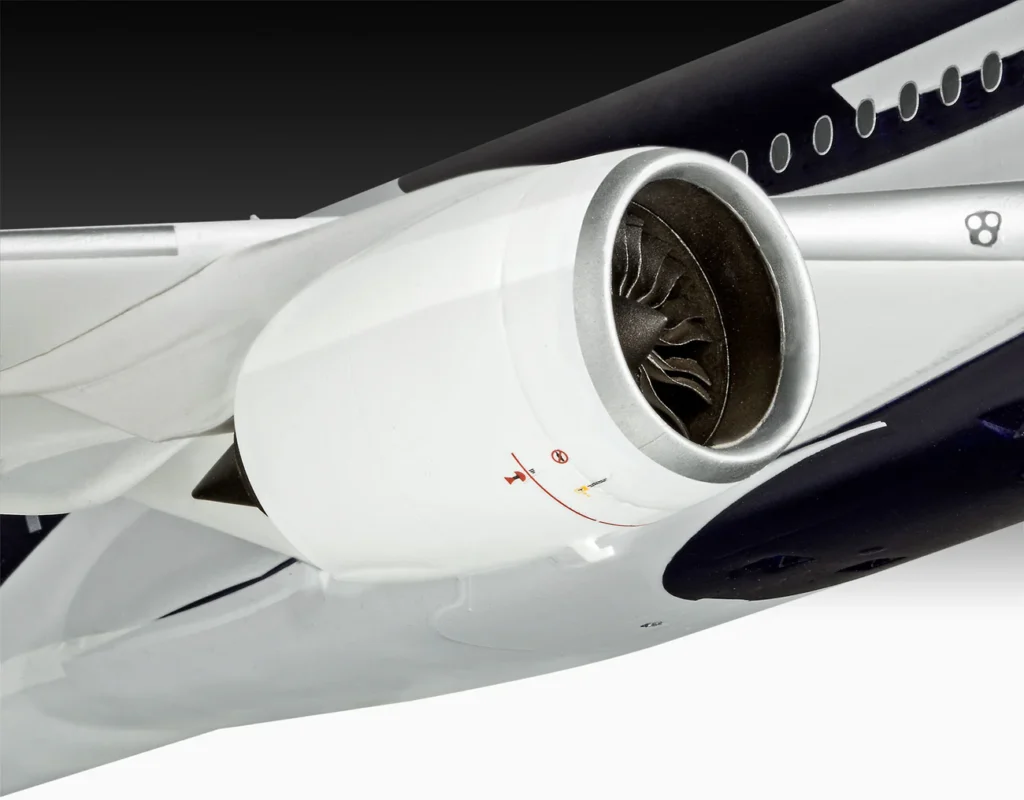
The A350-900’s structure is built from carbon fibre reinforced polymer, making it significantly lighter and more aerodynamically efficient. Powered by the latest-generation Rolls-Royce Trent XWB engines, the A350-900 operates quietly and consumes less fuel than older aircraft types. For model builders, this means recreating an aircraft that, in terms of its materials and aerodynamics, is almost as close to the world of scale modelling as it is to classical aluminium aviation: built from composite materials, optimised down to the last curve, and designed for long-haul operations.
Unboxing: What’s in the Box
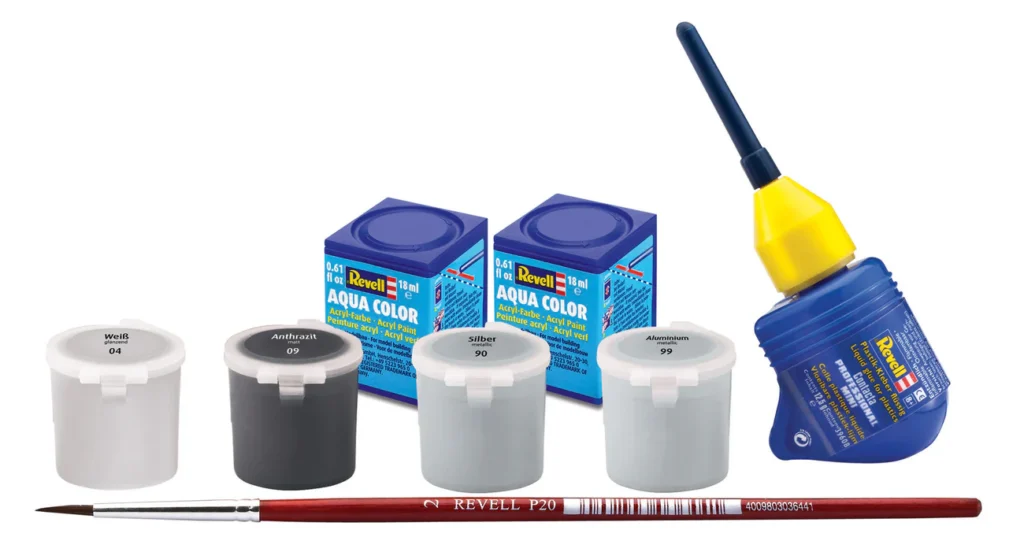
Our Lufthansa Airbus A350-900 kit in the anniversary livery is designed as a Gift Set, meaning you can get straight to work without having to rummage through the hobby room for glue and brushes. The set contains the kit itself in 1:144 scale with 120 parts in total, a special decal sheet featuring the 100th anniversary livery, base colours, a brush, glue, and a display stand that allows the finished model to be presented with either the undercarriage retracted or extended.
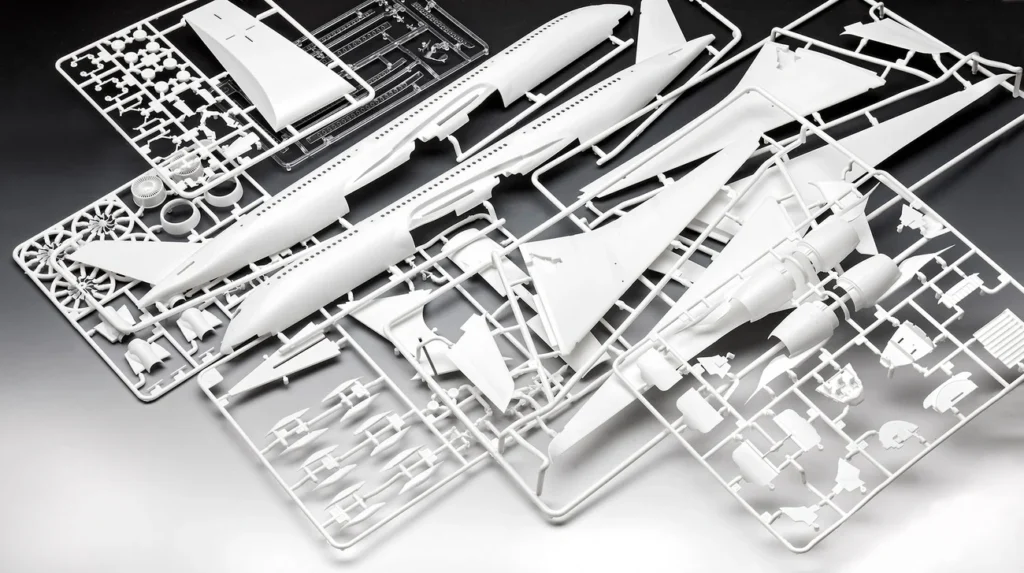
With a difficulty rating of Level 4, this kit is aimed at experienced model builders who enjoy a technically demanding build and are prepared to work with particular care during the finishing stage. The recommended age is 12 and above, but let’s be honest: anyone who wants to apply the special livery to its full effect should already have some experience handling decals. The challenge lies in combining the large areas of fuselage colour with the precise transition of the crane’s wing into the aircraft’s wing – and it is precisely here that the difference between a good result and a truly outstanding one is decided.
The engines and undercarriage are rendered in fine detail, which is especially effective when the model is displayed with the undercarriage extended and viewed from below: that is where the large “100” is positioned – just as it appears on the real D-AIXL’s underside.
The transition of the crane’s wing into the aircraft’s wing should be applied with the utmost care, as this detail is the most iconic element of the special livery and the first thing observers will notice. A quiet afternoon, good lighting and a quality decal softener make all the difference between a good finish and a truly outstanding result.
Limited and Significant: Why This Kit Holds a Special Place
We have used special liveries as the basis for our kits before, and we know that these editions have a very different longevity from standard models. The D-AIXL anniversary livery is tied to 2026 and is part of a campaign that Lufthansa will not repeat in this form. Our kit is a limited edition that captures the spirit of this year, and whoever has it finished and displayed in their cabinet will look back at it in ten or twenty years and see a model that preserves a very specific chapter in German aviation history.
For collectors who focus on Lufthansa models or special liveries as a theme, this kit is an almost essential piece. It brings together 100 years of corporate history, an iconic design concept and a technically cutting-edge aircraft in a single model – and does so in a scale that genuinely commands attention on the shelf.
A Model That Is Greater Than the Sum of Its Parts
The A350-900 in the Lufthansa 100th anniversary special livery is one of those kits where the context elevates the model. There are 120 individual parts, a decal sheet and a display stand. But what you are actually building is the story of an airline that began in 1926 as an economic merger of necessity, adopted a crane as its logo that was already eight years older than the company itself, survived two world wars and two refoundings, and today flies with an oversized white bird on a midnight blue fuselage along the very routes on which it took its first tentative steps into the air a hundred years ago.
Here is the aircraft arriving in Munich for the first time:
and here is the 100th anniversary event in Berlin as a highlights reel: