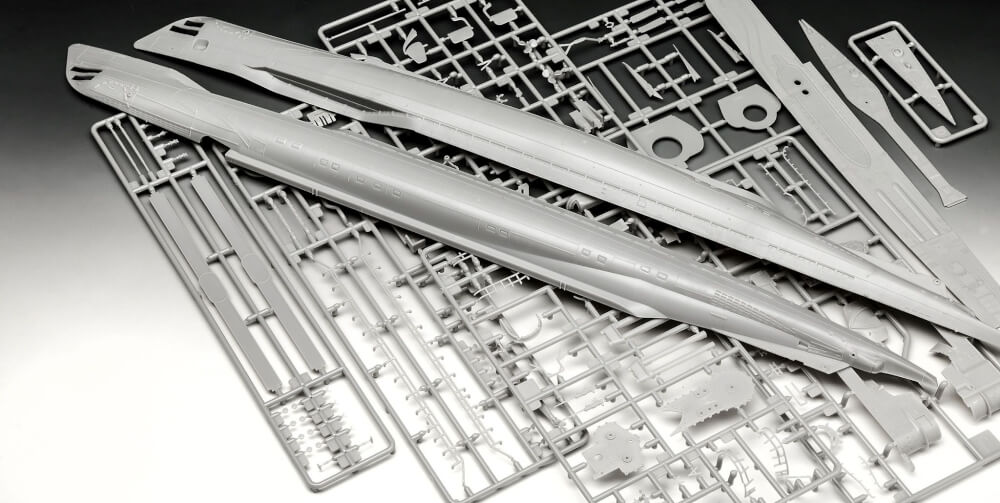
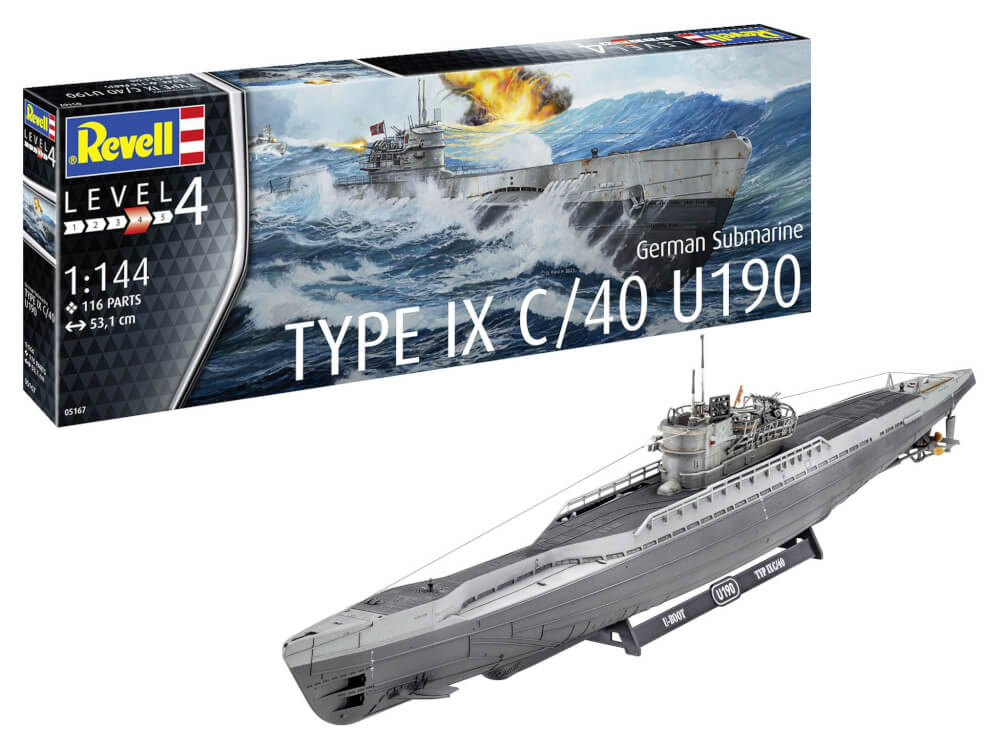
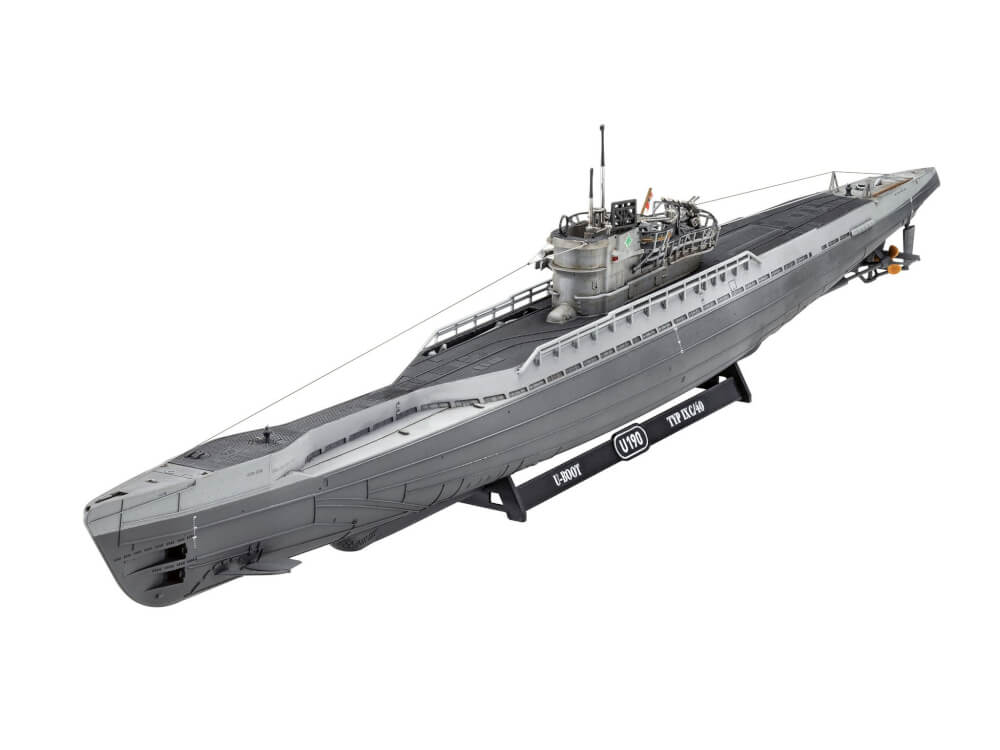
A remarkable New Tool model that appeals to modellers and history enthusiasts alike is the German submarine U190 of Type IX C-40 (Revell shop link). This submarine, which served in the Second World War, has a rich history full of technical peculiarities and thrilling operations, making it a fascinating project for any modeller, and it was built a total of 87 times between 1940 and 1944.
 Historical Background and Operations
The submarine U190 was laid down on 7 October 1941 at the Deschimag AG Weser shipyards in Bremen. It was launched on 8 June 1942 and commissioned on 24 September 1942, taking up its duty as a training boat under the command of Kapitänleutnant Max Wintermeyer.
Patrol voyage in the Atlantic.
U190 carried out its first 6 war patrols with the 33rd U-boat Flotilla, during which U190 sank two ships totalling 7,605 gross register tons.
On 22 February 1945, U190’s last operational voyage in the service of the Kriegsmarine began. Armed with 14 torpedoes, the submarine left Norway in order to prevent Allied ships around Sable Island from entering the port of Halifax. On 16 April 1945, while lying in wait near the Sambro, the crew suddenly heard the sonar of a British ship.
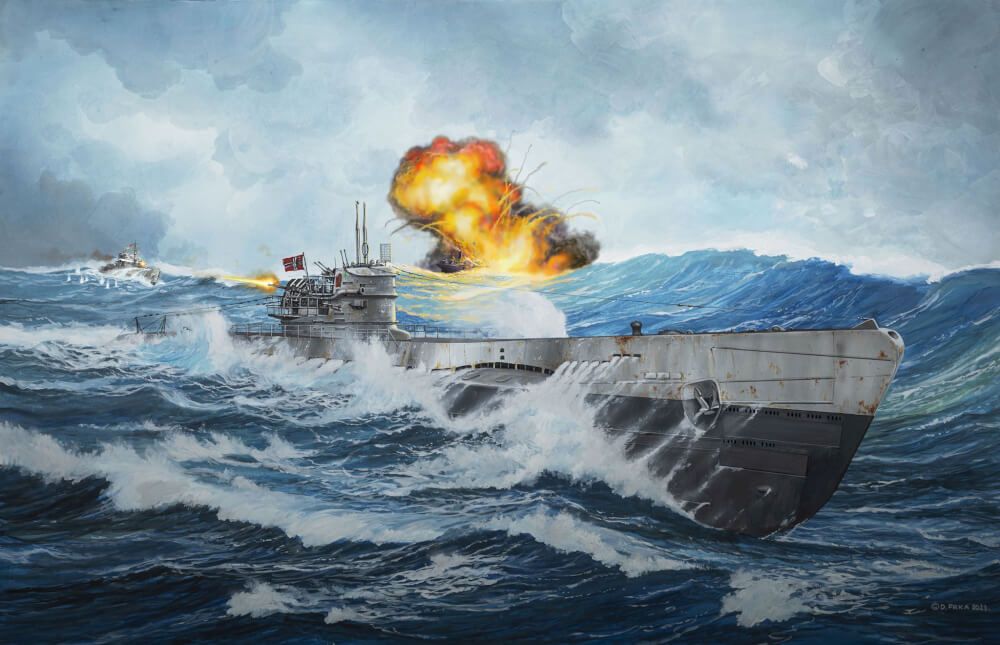
The minesweeper HMCS Esquimalt was on routine patrol protecting the harbour. Its crew, however, had taken no precautions against submarines: it was not zigzagging, had not streamed its towed acoustic decoy and had not activated its radar. When the Esquimalt turned towards the submarine, the commander of U190 decided to fire an acoustic torpedo from the stern tube. The torpedo hit the Esquimalt on the starboard side, and the ship sank within four minutes. Eight crew members died instantly, and although 44 sailors survived the sinking, many later fell victim to the cold and exhaustion. In total, 26 seamen could be rescued.
U190 remained on patrol after the attack until it received the surrender order from Karl Dönitz on 8 May 1945. On 11 May, the submarine encountered Canadian corvettes, and the crew signed the unconditional surrender. Flying a flag of truce, U190 sailed to Bay Bulls, Newfoundland, on 14 May. The crew was taken to Halifax.
Afterwards, U190 was integrated into the Royal Canadian Navy. In the summer of 1945 it undertook a ceremonial tour along the Saint Lawrence River with stops in various cities. After that, it served for a year and a half as HMCS U-190 as a training ship for anti-submarine exercises in the Royal Canadian Navy in Halifax.
The Last Voyage of U-190
U190 was decommissioned on 24 July 1947 and was given one final task: taking part in “Operation Scuttled”. The aim was to train recruits in naval combat techniques. Painted in conspicuous red and yellow stripes, U190 was towed to the spot where the Esquimalt had sunk and came under fire at 11:00 on 21 October 1947.
The exercise began with the firing of rockets and ended with massive fire from 4.7-inch guns and a depth charge. Watched by numerous reporters and warships, and attacked by naval aircraft, U190 sank in less than 20 minutes.
Technical Features of the Type IX C-40
The submarines of Type IX C-40 were designed primarily for long-range patrols and operations in the remote parts of the Atlantic. Here are some of the technical features that made U190 an impressive example of German engineering:
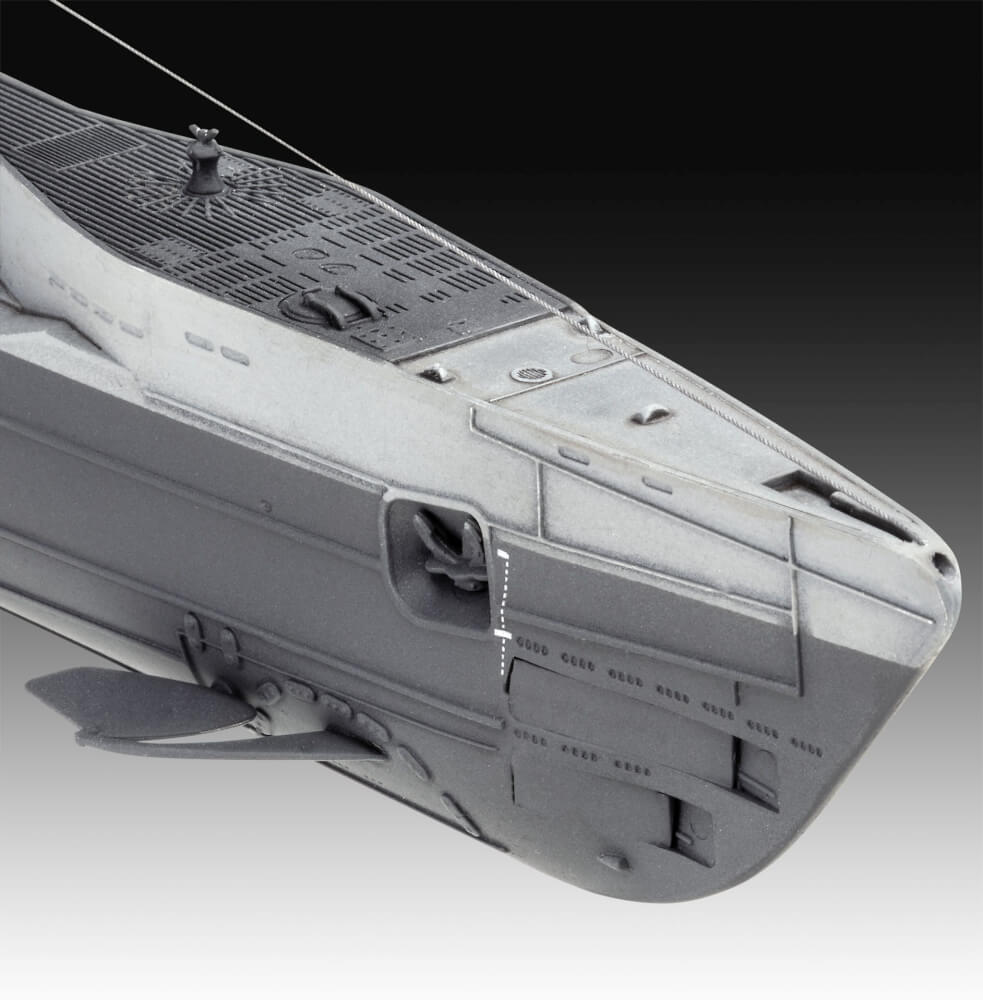
U190 had a length of 76.5 metres and a beam of 6.5 metres. With a displacement of 1,144 tons (surfaced) and 1,257 tons (submerged), it could achieve an impressive range of up to 13,850 nautical miles at 10 knots, which made it ideal for long deployments. And even submerged, the boat managed 63 nautical miles at 4 knots.
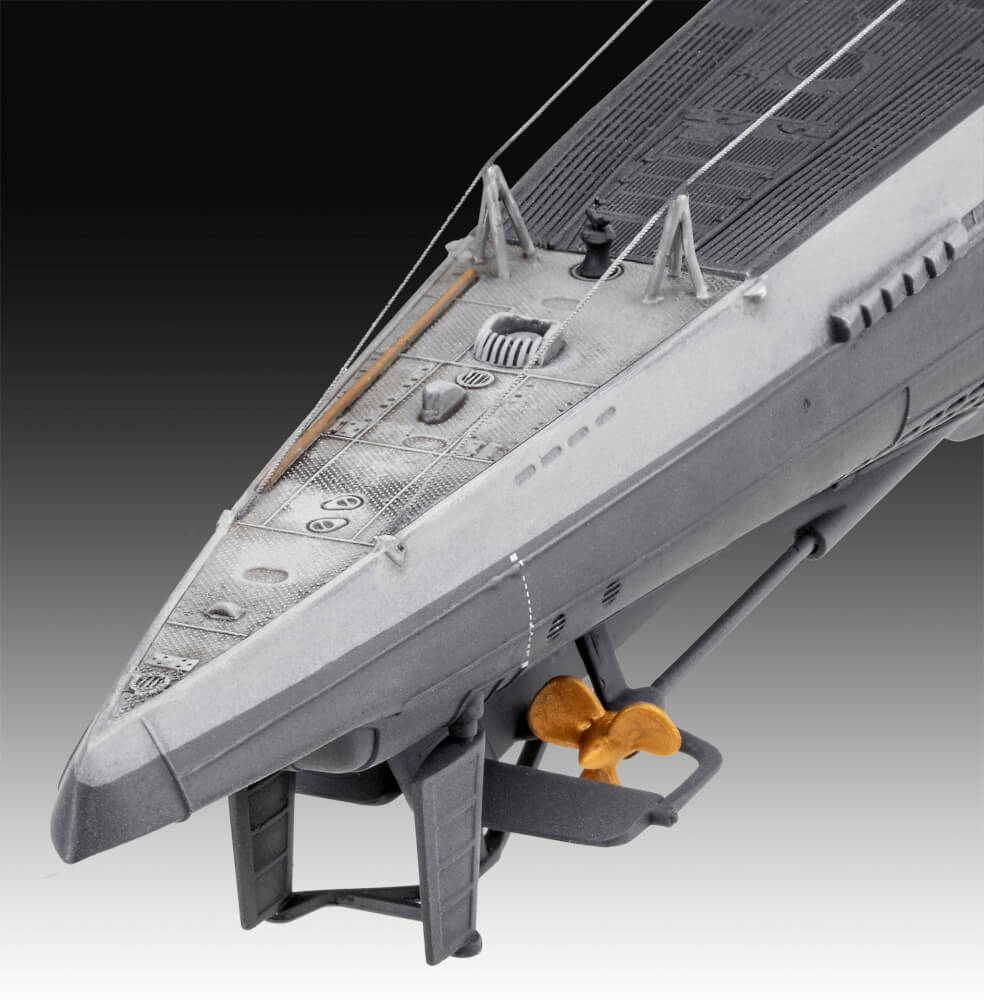
For this purpose, the submarine was powered by two MAN M9V40/46 diesel engines, which delivered a combined output of 4,400 hp (surfaced). Underwater, the submarine was driven by two SSW GU 345/34 electric motors with an output of 1,000 hp. These propulsion systems enabled a top speed of 18.3 knots (surfaced) and 7.3 knots (submerged). To that end it was equipped with 74.9 tons of batteries.
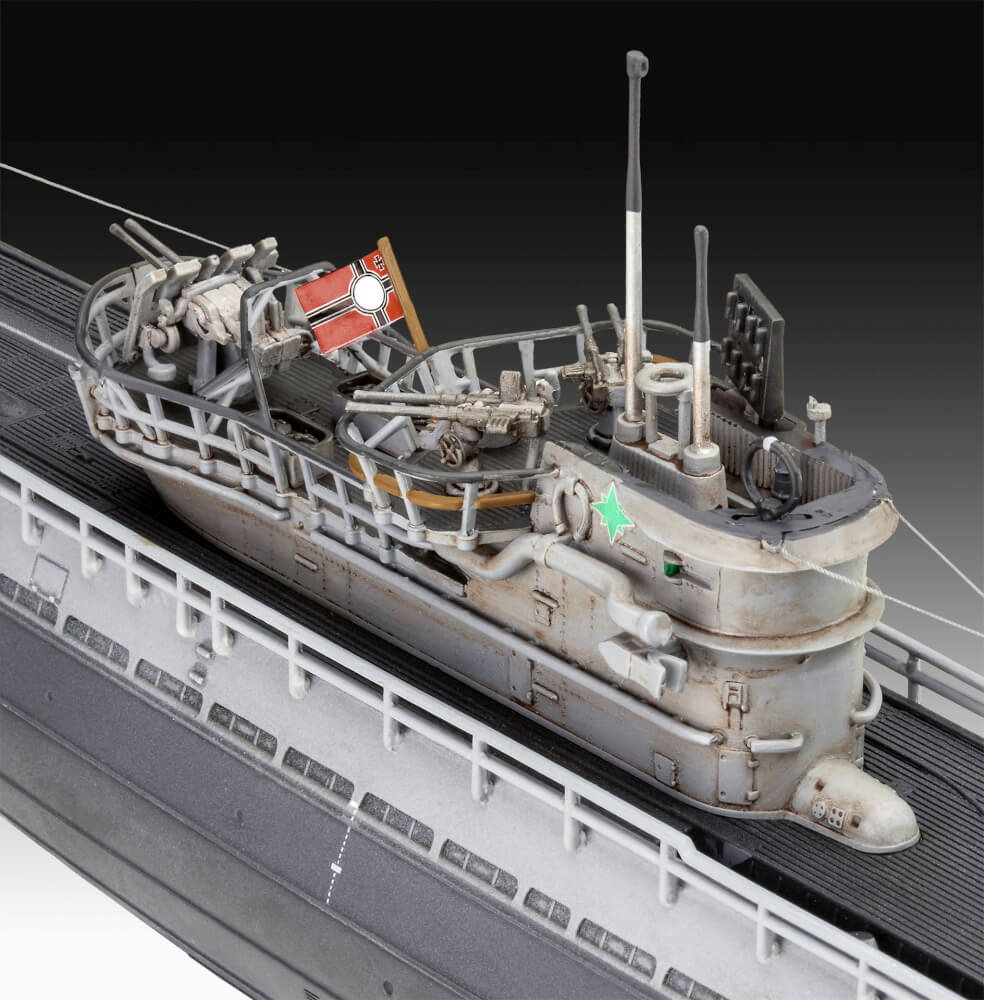
U190 was armed with six torpedo tubes (four in the bow and two in the stern) and one 10.5 cm SK C/32 deck gun, and could carry up to 22 torpedoes. In addition, it had various anti-aircraft weapons, including a 3.7 cm FlaK M42 and two 2 cm C/30 twin AA guns.
The crew initially consisted of 48 men and was increased from 1943/44 by additional AA gun crews to a total of 60 men.
U190 could reach a maximum diving depth of about 200 metres, which made it hard to locate in many situations. The crash-dive time was
Special Highlights for Modellers
For modellers, U190 offers numerous interesting challenges and details that make it a rewarding project. Here are some aspects that are particularly fascinating:
The many technical details and the complex armament of the submarine make it a perfect candidate for a detailed replica. Modellers can focus on the precise reproduction of the torpedo tubes, the deck gun and the anti-aircraft weapons.
The history of U190, in particular the sinking of HMCS Esquimalt and the subsequent internment and use by the Royal Canadian Navy as well as the final sinking of the submarine during an exercise, offer numerous possibilities for diorama-style depictions and scenarios.
The specific markings and camouflage patterns used during the various phases of its service allow you to illustrate different historical periods and operational conditions.
Highlights of the Kit in 1:144
The submarine U190 of Type IX C-40 (Revell shop link) is a fascinating piece of naval history and a challenging model-making project. With the right mixture of historical knowledge and craftsmanship, modellers can create a faithfully detailed and historically accurate model that brings the significance and the stories of this submarine class to life.
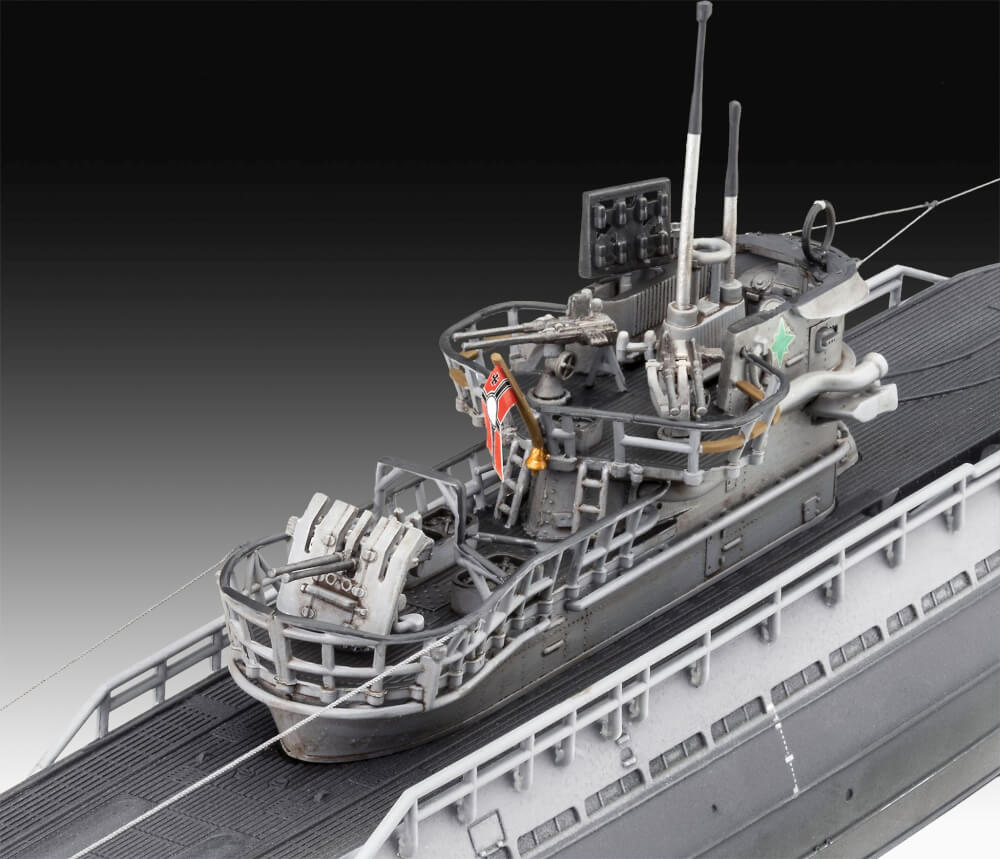
From 115 highly detailed plastic parts, experienced modellers aged 12 and over at Level 4 obtain a finished model measuring 47.5 cm in length.
Features:
- 115 highly detailed plastic parts
- Quick-diving device and snorkel
- Late version with large Wintergarten (the platform adjoining the conning tower aft)
- Detailed rudders and propellers
- Illustrated, multilingual assembly instructions for effortless building
- Decals for the perfect finish