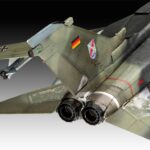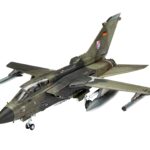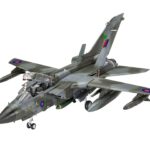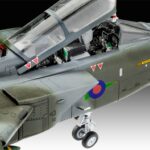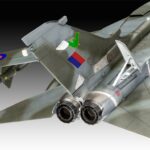
The Panavia Tornado celebrated its 50th anniversary and looks back on an impressive career that made it one of the most versatile and capable combat aircraft in history. This aircraft, jointly developed by Great Britain, Germany and Italy, has proven in numerous conflicts and missions that it is more than equal to the demands of modern aerial warfare.
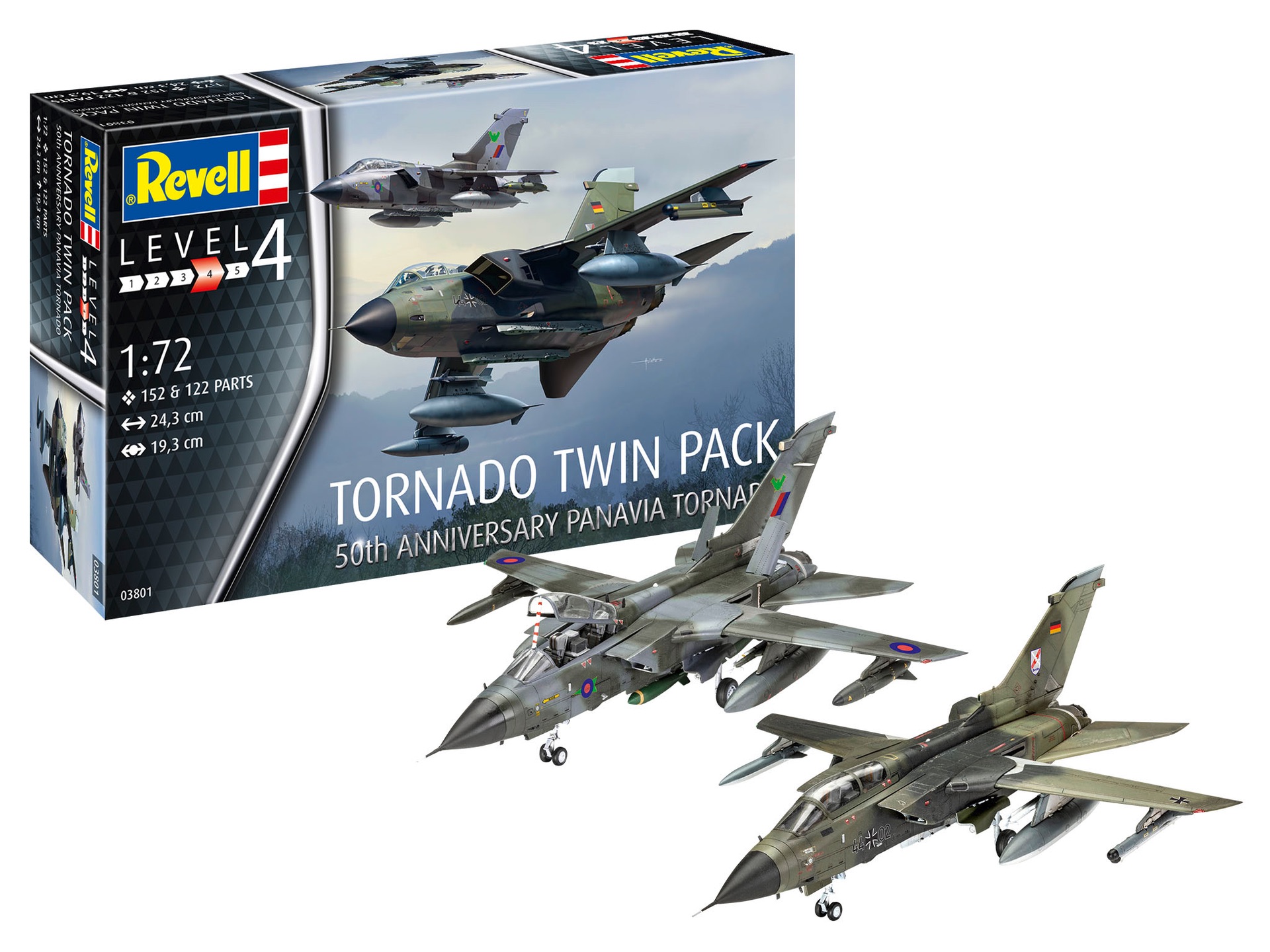
Naturally, we have something in store for the 50th birthday:
TwinPack 50th Anniversary Panavia Tornado (Revell shop link)
What does Panavia stand for?
The “Panavia” in the name Panavia Tornado stands for the consortium Panavia Aircraft GmbH, which is responsible for the development and production of the Tornado combat aircraft. Panavia Aircraft GmbH is a multinational consortium founded in 1969 and made up of three main partners:
British Aerospace (BAe) from the United Kingdom, which later became part of BAE Systems.
MBB (Messerschmitt-Bölkow-Blohm) from Germany, which later became part of DASA (Deutsche Aerospace) and was eventually absorbed into Airbus.
Alenia Aeronautica from Italy, which is part of Leonardo S.p.A.
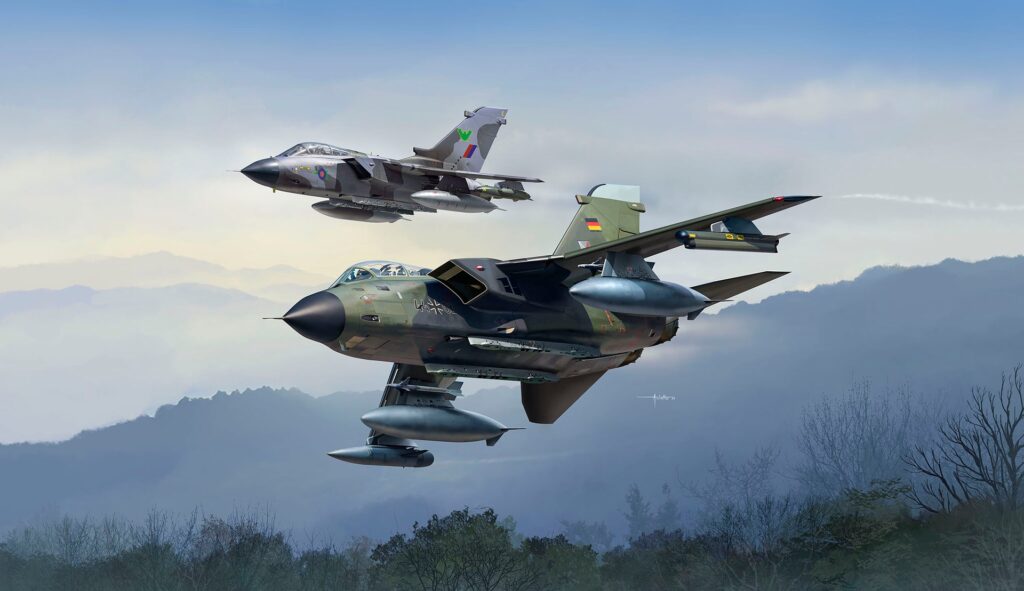
The consortium was founded to pool the resources and expertise of these three countries and to develop a modern, high-performance multi-role combat aircraft that would meet the requirements of all three air forces. The Panavia Tornado is the result of this collaboration and a symbol of successful cooperation within the European aviation industry.
The origins of the Tornado
Development of the Panavia Tornado began in the 1960s, when the air forces of the three countries were looking for a multi-role combat aircraft suitable for both air-to-ground and air-to-air missions. The result of this cooperation was the Tornado, which exists in various versions: Tornado IDS (Interdictor/Strike), Tornado ECR (Electronic Combat/Reconnaissance) and Tornado ADV (Air Defence Variant).
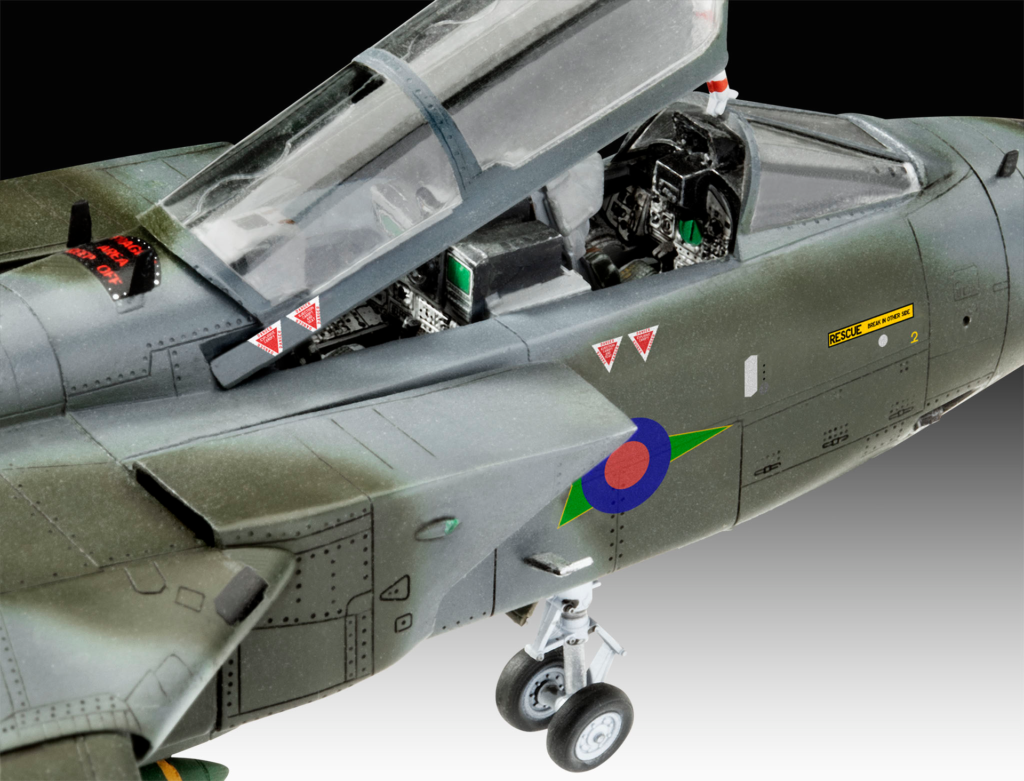
The Tornado’s maiden flight took place on 14 August 1974, and since its introduction in the 1980s the aircraft has served in numerous military operations, including the Gulf War, the Kosovo conflict and Afghanistan.
Technical features
The Tornado is known for its swing wings, which enable outstanding performance at different speeds and altitudes. This capability gives the aircraft exceptional flexibility, whether for high-speed low-level missions or for long-range missions covering great distances.
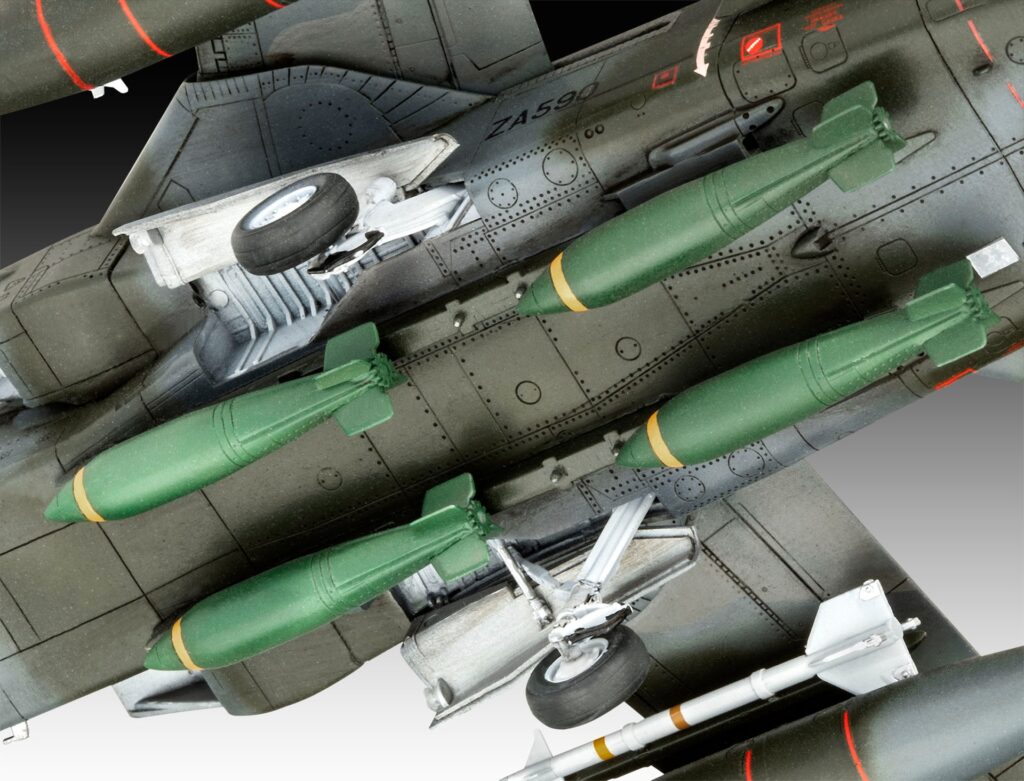
Power comes from two Turbo-Union RB199 engines, which deliver a top speed of Mach 2.2 and excellent thrust. The avionics consist of highly developed navigation and weapon systems that allow precise target acquisition and engagement with a broad spectrum of weapons, including laser- and GPS-guided bombs, anti-radiation missiles, air-to-air missiles and cannons.
Operational history
Over its 50-year history, the Tornado has taken part in numerous military operations:
Gulf War (1990-1991): The Tornado played a decisive role in Operation Desert Storm, carrying out precise strikes on Iraqi targets and demonstrating its versatility and striking power in the process.
Kosovo conflict (1999): Tornado aircraft flew strikes against Serbian military targets and supported the NATO operation Allied Force.
Afghanistan (2001-2021): The Tornado IDS and ECR were used intensively for close air support and reconnaissance missions, which showed its adaptability to different combat scenarios.
Kit highlights
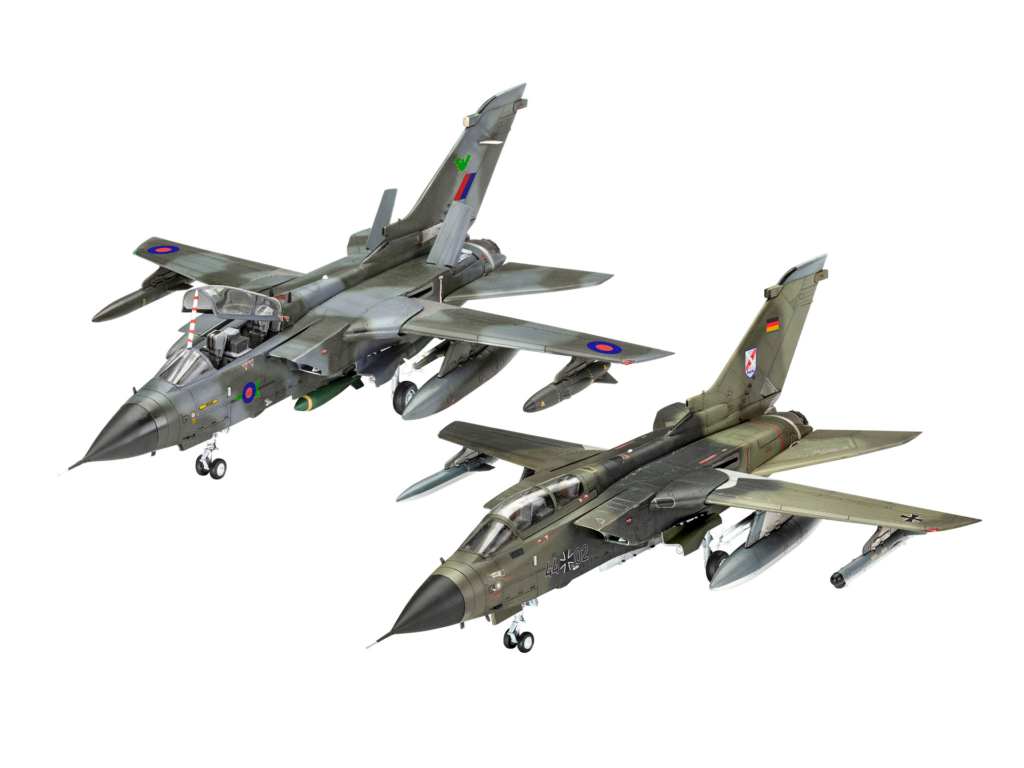
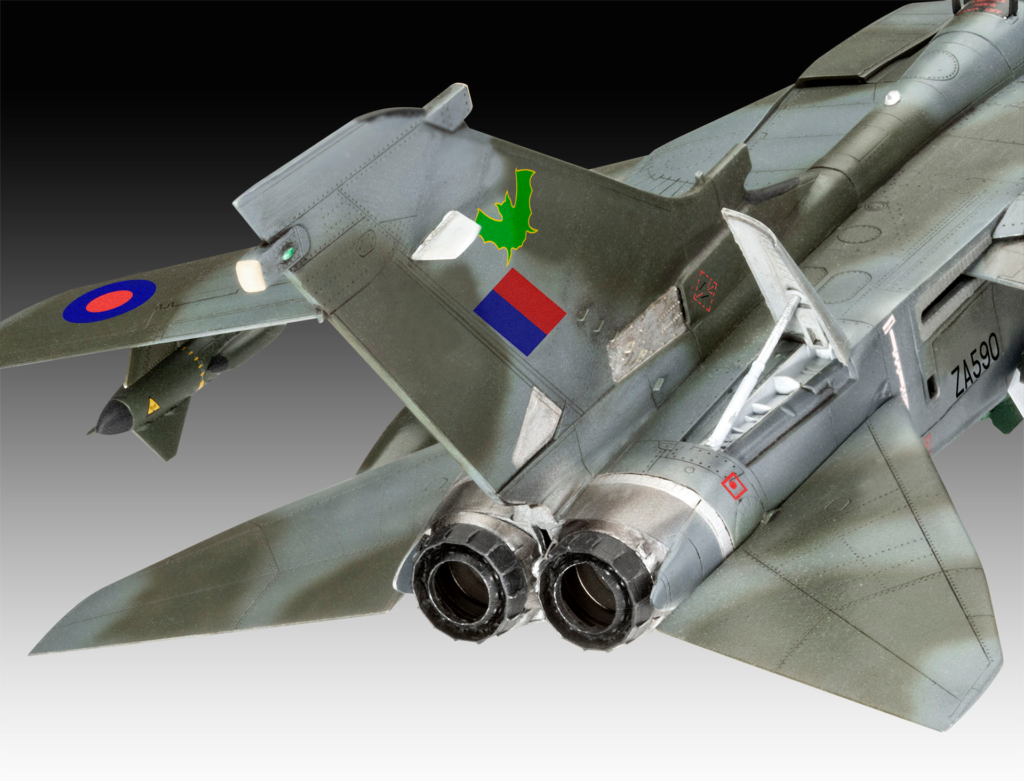
The Tornado was operated in numerous camouflage schemes, from desert camouflage to European woodland and winter patterns. Our kit includes the decals and painting references for one Luftwaffe and one Royal Air Force version.
274 individual parts make up two iconic aircraft at Level 4 for experienced modellers, with a length of 24.3 cm and a wingspan of 20.1 centimetres.
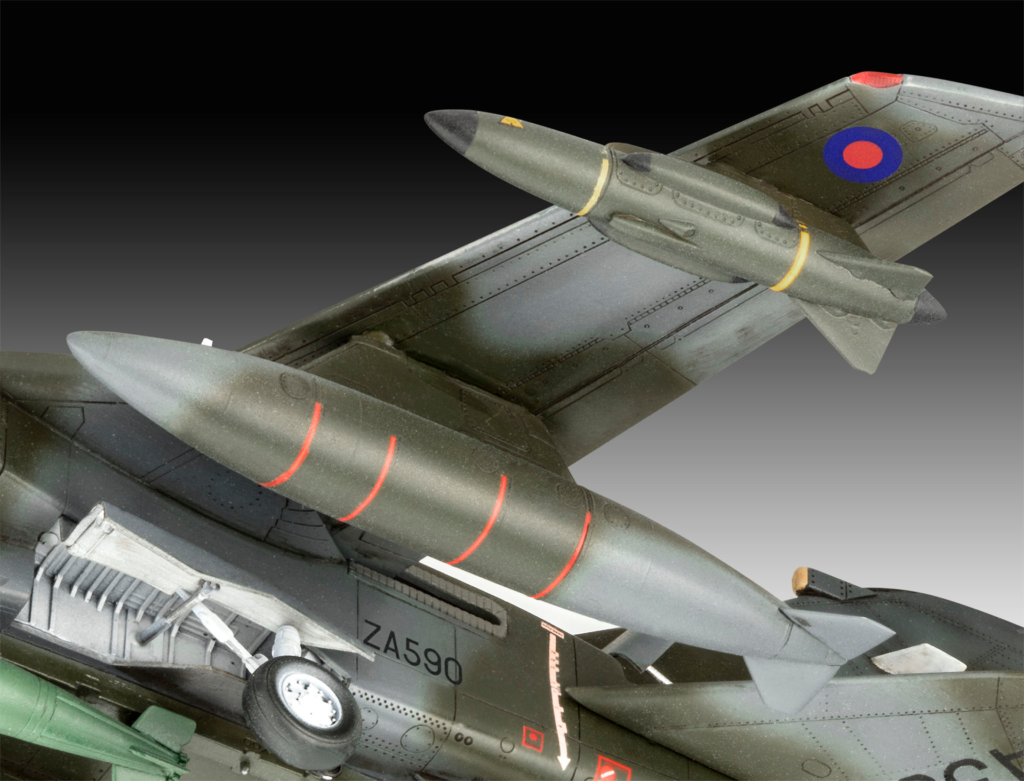
The wide range of operational theatres and historic missions offers a wealth of scenarios for realistic and highly detailed dioramas.
- Extensive external stores
- Recessed panel lines
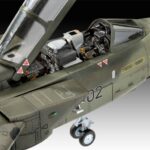
- Detailed cockpit with pronounced instrument panels
- Authentic landing gear
- Air-to-air refuelling probe
- Characteristic ejection seats
- Decals for German and British versions
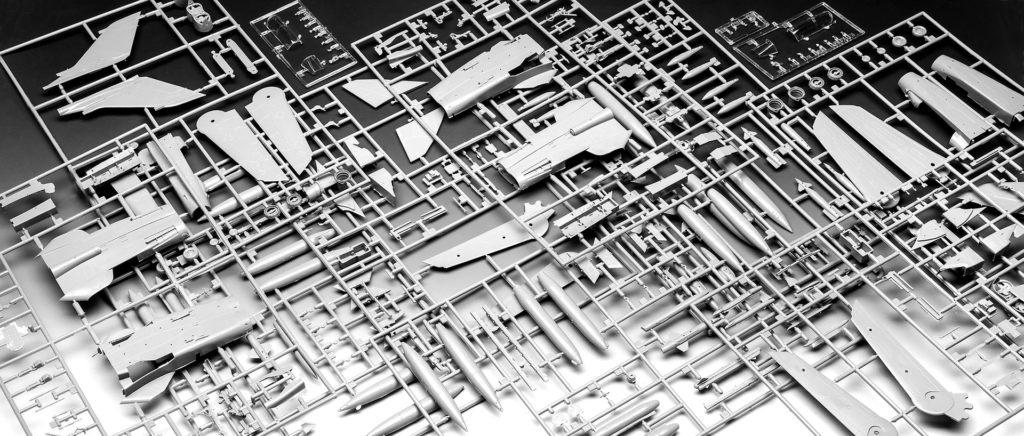
The 50th anniversary of the Panavia Tornado is not only a milestone in aviation history, but also a reminder of the remarkable engineering craftsmanship and the cooperation between nations. For modellers and aviation enthusiasts, the Tornado remains a fascinating and demanding project that pays tribute to the impressive history and technology of this iconic aircraft.