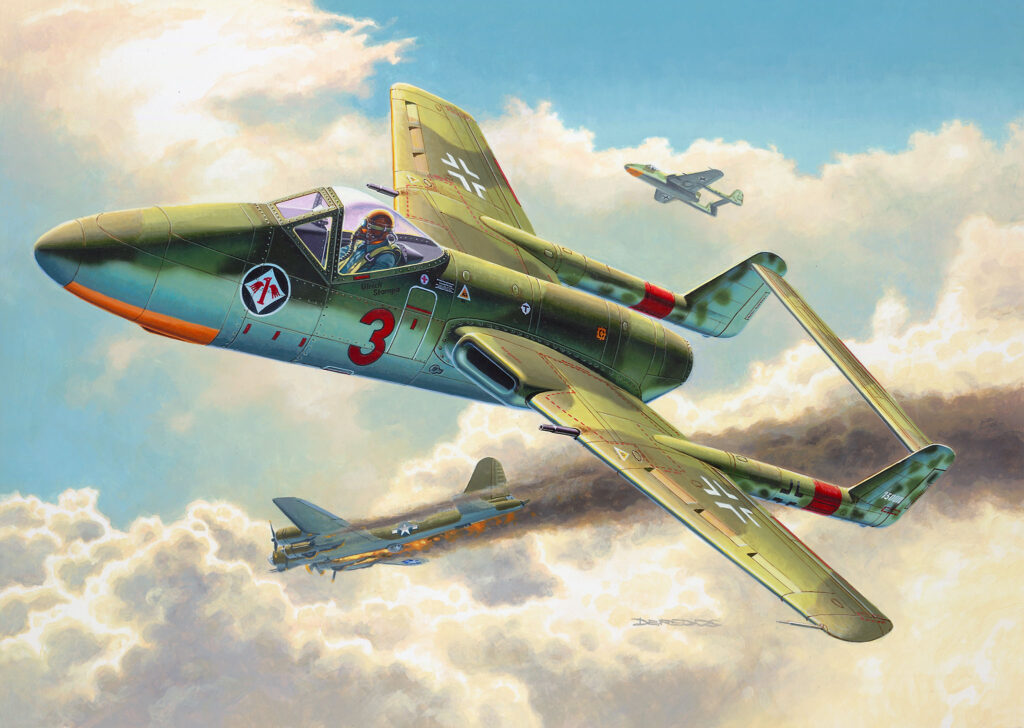
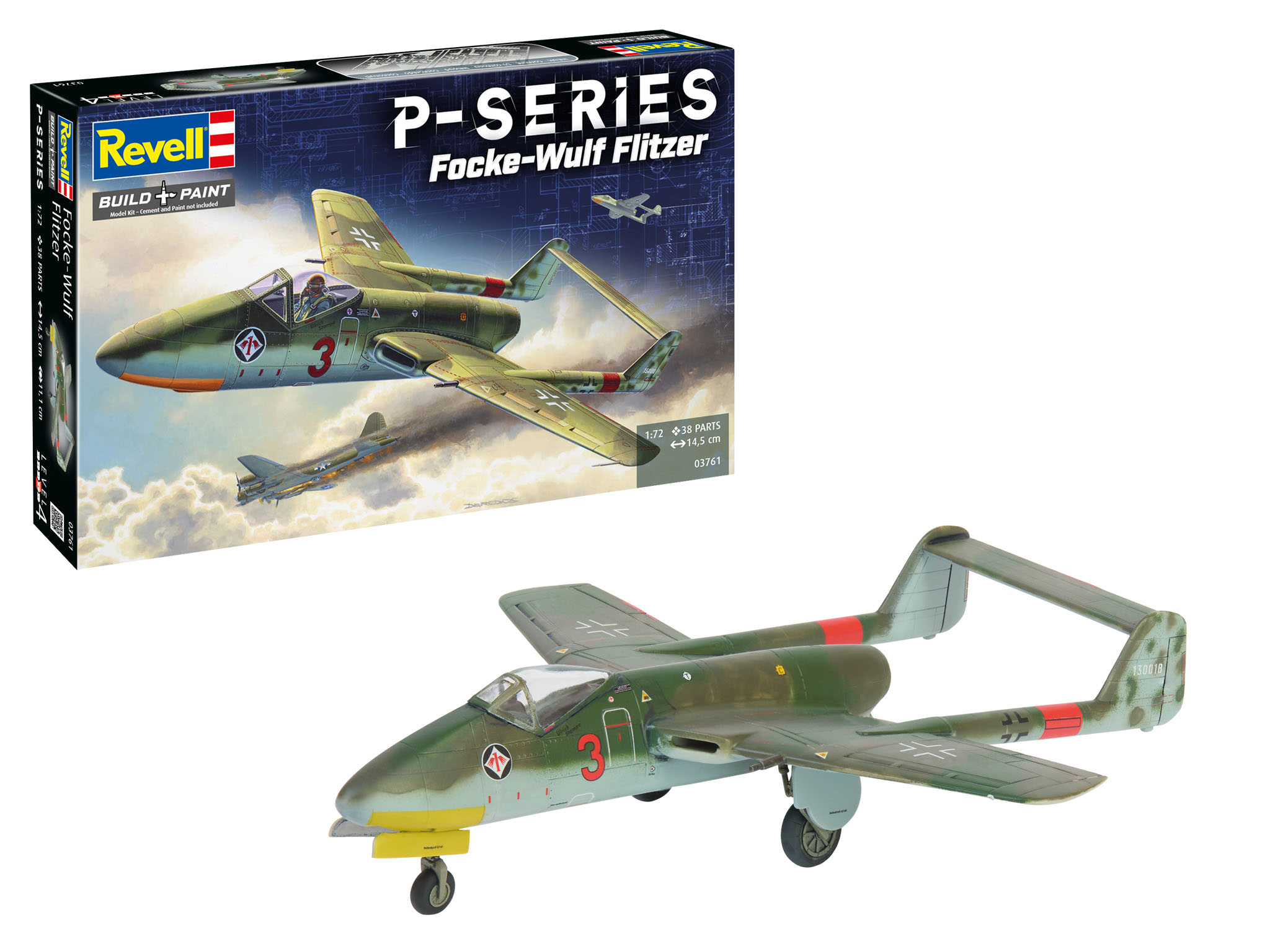
Some airplanes make history because they fly. Others make history because they never did. The Focke-Wulf TL Jäger „Flitzer” belongs to the second category, and that’s exactly what makes it so fascinating. It is one of those projects that aviation historians and model builders have been puzzling over for decades, because they had the potential to change the course of the war in the air, but never progressed beyond a full-size wooden model and a few hundred pages of construction drawings. With our kit from the P-Series, you now bring a piece of this alternative history to your shelf.
Direct to the model kit in the Revell Shop
From Bremen to the Wind Tunnel: How the Flitzer Was Created
The story of the Flitzer begins in March 1943 in the design offices of Focke-Wulf Flugzeugbau AG. At this time, the German aviation industry was under enormous pressure. The Messerschmitt Me 262 was technically a breakthrough, but its weaknesses were known: it required long runways for takeoff and landing, was vulnerable in low-altitude phases, and its engines consumed scarce resources. The Reich Aviation Ministry was looking for alternatives, and Focke-Wulf’s chief designer Kurt Tank had an answer ready.
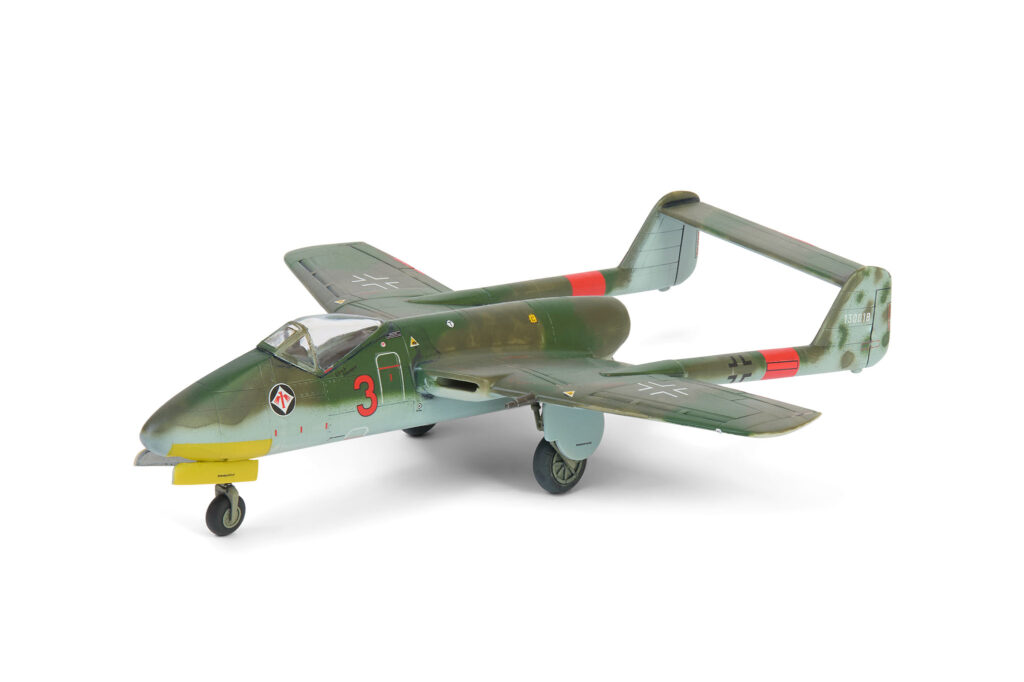
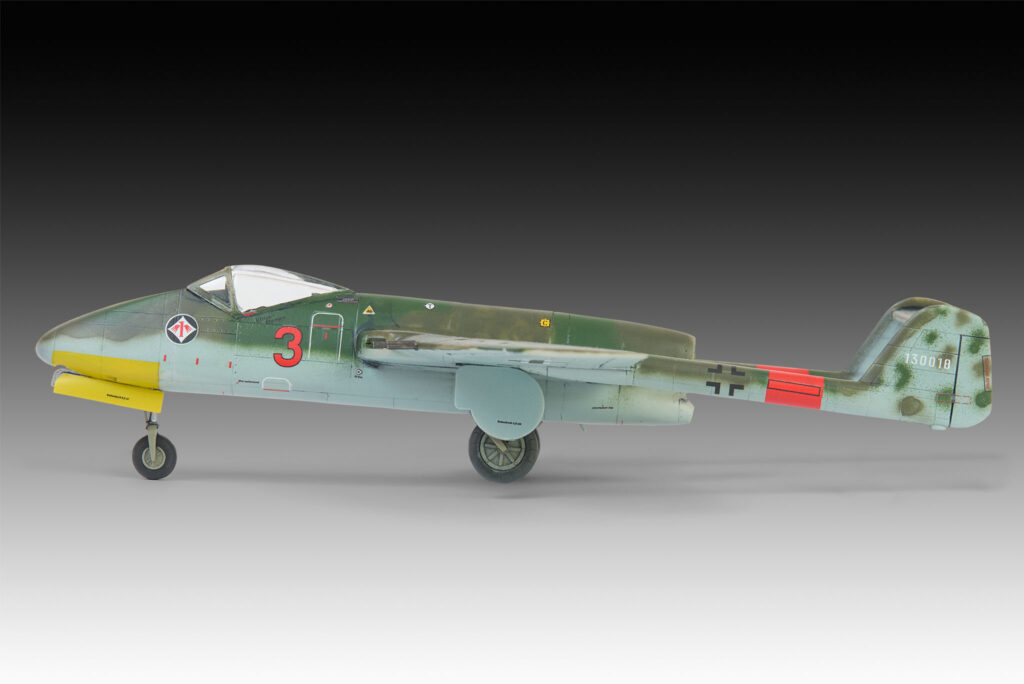
Tank and his team developed under the internal designation Project VI, occasionally also referred to as P.VII, a single-engine fighter with a configuration that was completely new in Germany. The central fuselage pod with a short, squat fuselage, plus two long tail boom carriers that bore the control surfaces at the rear end; that was the core of the Flitzer concept. Anyone who inevitably thinks of the British de Havilland Vampire when reading this description is not wrong. Both constructions emerged independently of each other in the same phase of the war and arrived at astonishingly similar results, due to the ingenious but also compelling logic of this design approach.
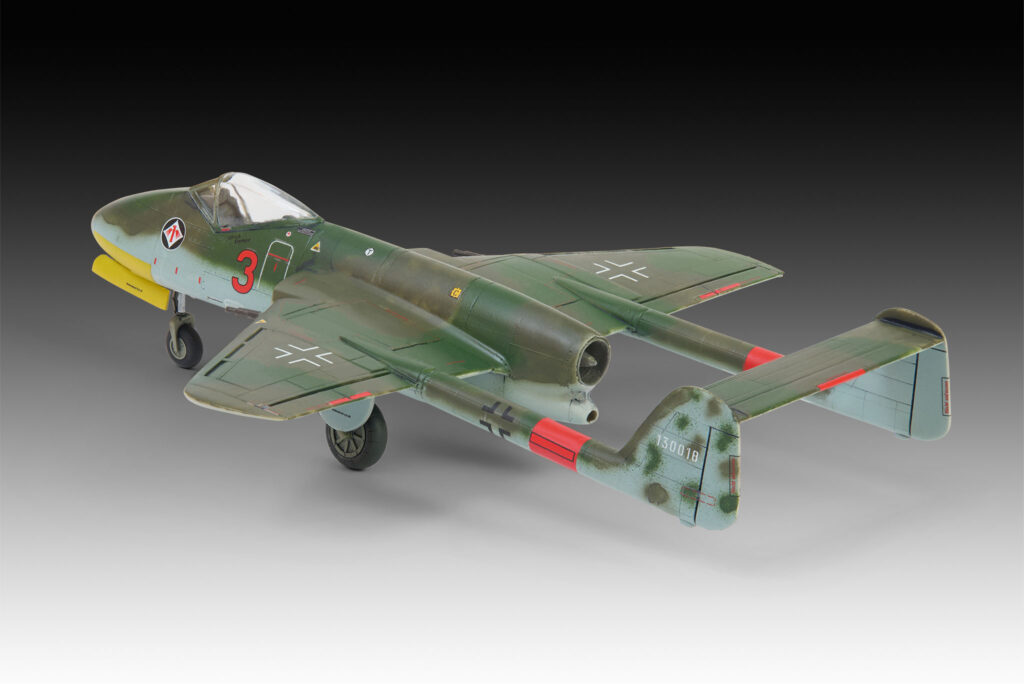
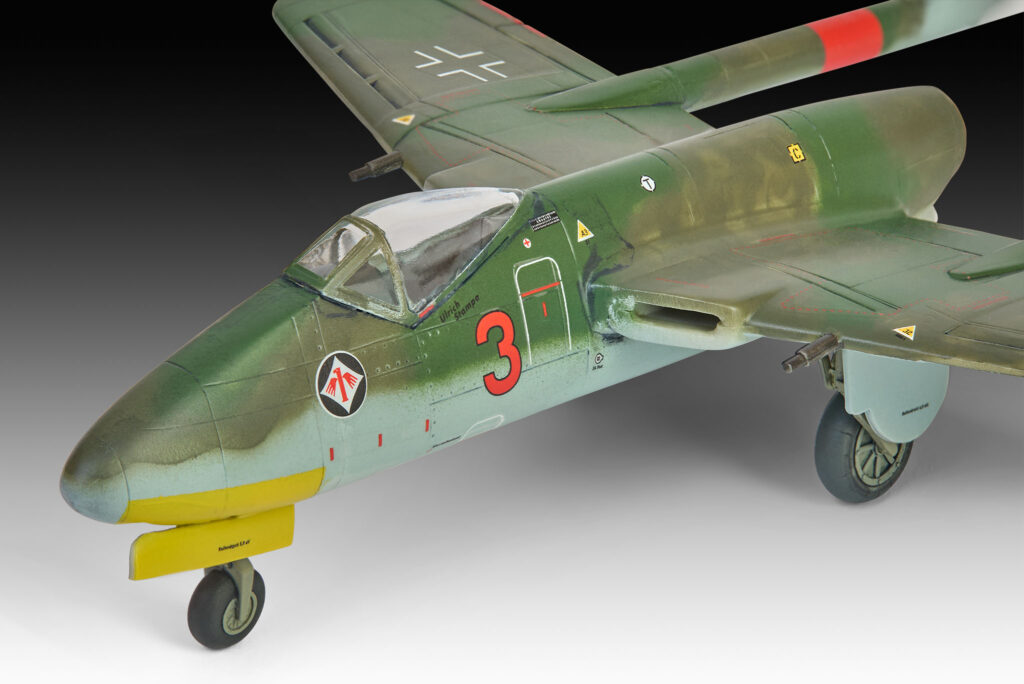
The name „Flitzer” can best be translated into English as „Dasher” or „Sprinter”, and it was true to its name. The project envisioned the Heinkel HeS 011 A jet engine as the main propulsion, in combination with an additional Walter HWK 109-509 rocket engine for short bursts of thrust, enabling a top speed of up to 955 km/h at high altitude. This would have clearly surpassed the Me 262. During the design work, the engine air intakes moved from the nose of the fuselage to the wing roots, which significantly improved the aerodynamics and brought the aircraft’s silhouette into its final, distinctive form.
Kurt Tank and the Dilemma of Resources
Anyone who wants to understand the Flitzer must understand Kurt Tank. Tank was not only a brilliant designer, he was also a pragmatic engineer who kept a very close eye on the political and economic framework conditions of the Third Reich. He presented the Flitzer to the Reich Aviation Ministry on February 1, 1944, under construction description number 280 as a so-called Mosquito fighter, i.e., a light interceptor specifically designed to counter the heavy Allied bomber escort by Mosquitos. 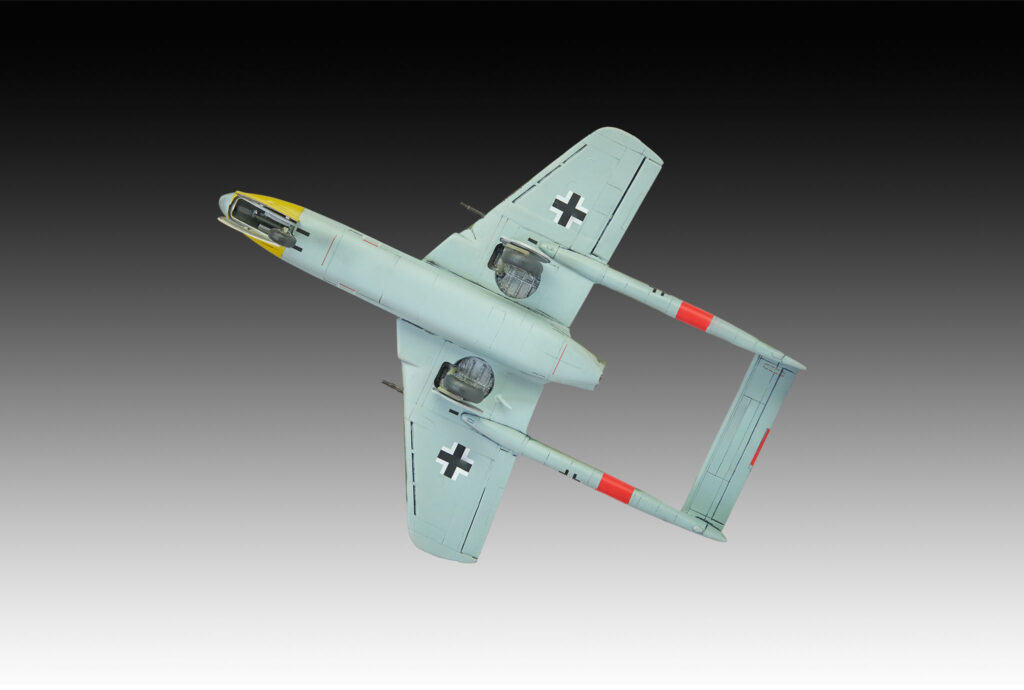
The performance data that Tank submitted to the RLM were impressive. A climb rate of 18.2 meters per second, a service ceiling of 13,000 meters, a wingspan of just 8 meters, and a length of 10.55 meters made the Flitzer a compact, highly agile interceptor. The armament with two 30-mm MK-103 cannons and two 20-mm MG-151 cannons was very serious for a fighter of this size. Nevertheless, the RLM was not really biting, and the main reason was practical: the Heinkel HeS 011 engine was simply not available in sufficient numbers. It was one of Germany’s most advanced jet engines, but production consistently lagged behind expectations.
Tank then developed variants with the weaker BMW 003 engine, which reduced the performance data so much that the Flitzer no longer had convincing arguments compared to the competing Ta 183 „Huckebein” project. On October 3, 1944, the entire Flitzer program was officially canceled. At that time, a complete wooden mock-up in 1:1 scale and all construction and assembly plans existed; however, no flyable prototype had ever been built.
A Brother Named Volksflitzer
An interesting side story of the Flitzer project is its connection to the so-called Volksjäger competition of 1944. The RLM called for an easily producible, inexpensive fighter that could be manufactured in large numbers as quickly as possible. Kurt Tank fundamentally rejected the underlying concept, convinced that such an aircraft would be hopelessly inferior to any Allied jet fighter at the time of its frontline introduction, but Focke-Wulf submitted a design anyway. This was based on a heavily simplified version of the Flitzer and was initially referred to internally as „Volksflitzer” or also „Volksflugzeug”. The concept did not progress beyond the design phase, as Heinkel won the race with the He 162 „Salamander”.
This episode shows how fundamentally the Flitzer design served as a starting point for various development branches and how much Focke-Wulf had to juggle within the chaotic armaments apparatus of the late war phase.
Luftwaffe ’46: The Phenomenon of Paper Airplanes in Model Building Culture
Discover the Flitzer model kit now in the Revell Shop
The term „Luftwaffe ’46” has established itself in the model building and aviation history scene for an entire discipline: the study of German aircraft projects that could theoretically have been operational by 1946, but never were for various reasons. It is a special form of counterfactual history that does not deal with military decisions or political alternatives, but with concrete engineering technology and the attempt to visualize plans that were lost or destroyed in the turmoil of the war’s end.
The Flitzer is one of the most fascinating objects in this cosmos because it was so far developed that its technical parameters are well documented, yet it leaves so many open questions. What exact paint scheme would a production aircraft have worn? Which unit would have been equipped with it first? Would the combination of jet and rocket engine have actually achieved the projected performance data? These questions have occupied the Luftwaffe-46 enthusiast community for decades and continue to inspire new model building projects, dioramas, and creative paint jobs.
In model building literature, the Flitzer regularly appears in standard works like Walter Schick and Ingolf Meyer’s „Luftwaffe Secret Projects: Fighters 1939-1945″, a book that has become the most important reference for many modelers in this field. David Myhra’s „Secret Aircraft Designs of the Third Reich” also devotes its own pages to the project, and Wolfgang Wagner’s biography of Kurt Tank, published under the title „Kurt Tank: Designer and Test Pilot at Focke-Wulf”, illuminates the development process from the chief designer’s perspective. These books are indispensable for anyone who wants to build the Flitzer kit with truly well-founded background knowledge.
A Model with History on the Shelf: The Revell P-Series
We at Revell are proud to offer the Flitzer again as the third release in our P-Series (Prototype-Series). The last edition of this model kit appeared in 2008, and since then we have repeatedly received requests from the community asking if and when this extraordinary kit would return. The answer is: now.
What makes the Flitzer in 1:72 so special for your collection? First of all, the shape itself. The model with its short, squat central fuselage pod and the two long tail booms is an immediate eye-catcher in any display case because it looks so fundamentally different from the usual patterns of war aviation. Anyone building a collection with Me 262, He 162, and other jet projects finds in the Flitzer the ideal exotic piece that immediately raises questions and tells stories.
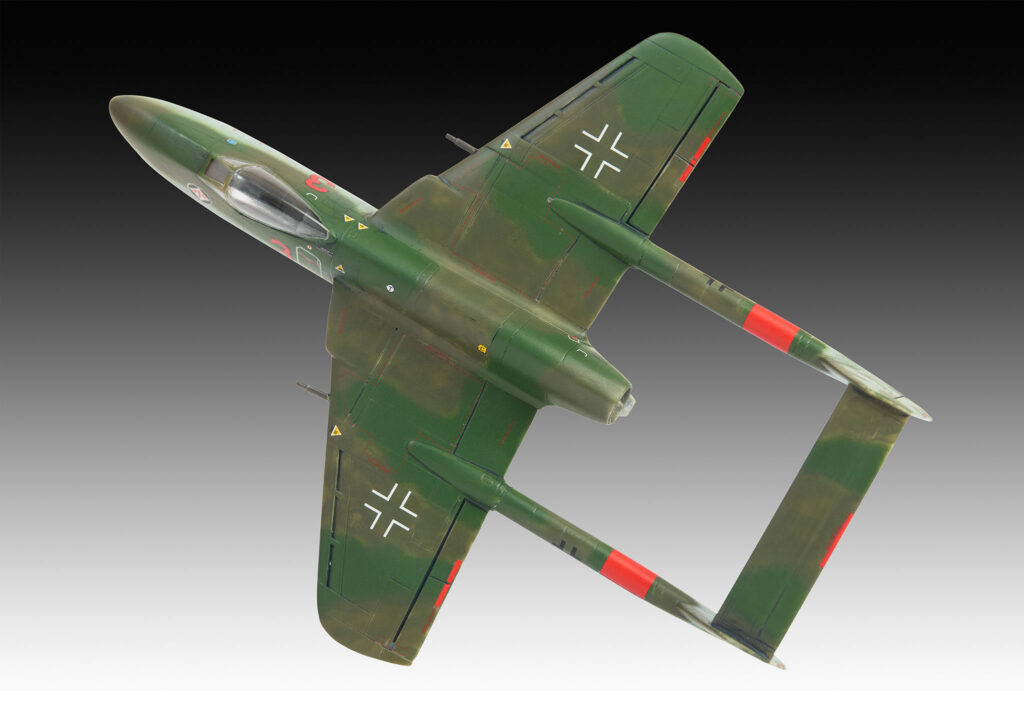
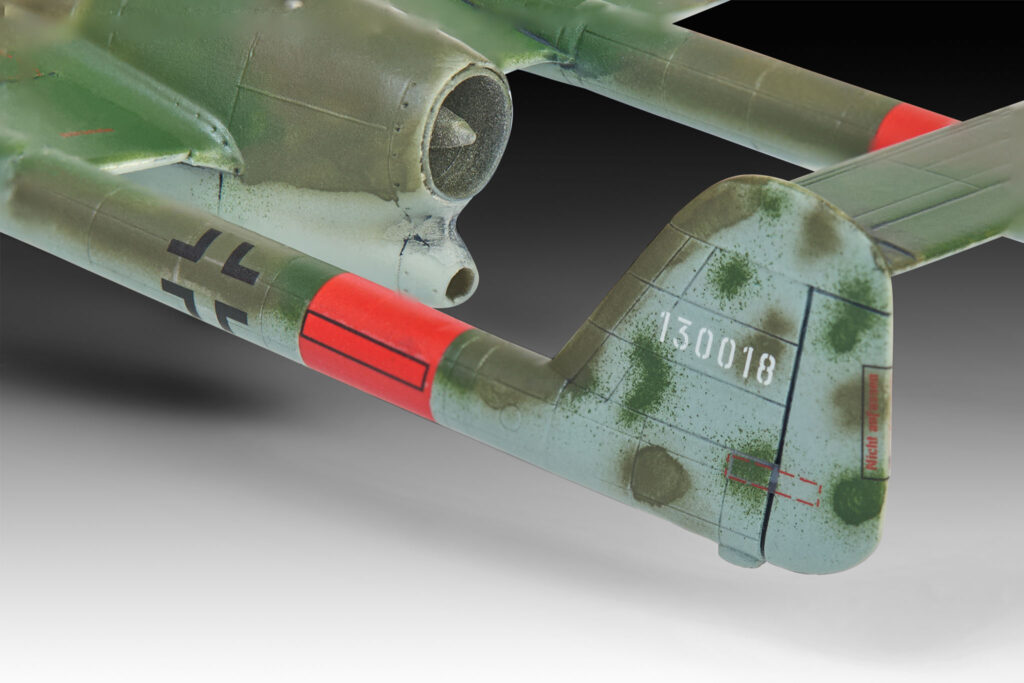
Since no original ever flew, the included decals offer fictional but historically plausible unit markings, giving you as model builders the appealing opportunity to make your own creative decisions. Which squadron would have flown the Flitzer? What individual aircraft emblem would it have carried? This freedom is a privilege that does not exist with documented production aircraft.
From the Drawing Board to the Cockpit: The Technical Fascination of the Flitzer
For all those who want to dive deeper into the subject, a closer look at what technically distinguished the Flitzer is worthwhile. The combination of a jet engine and a rocket engine was not uncommon at the time; the Me 163 „Komet” also flew exclusively with rocket propulsion, and various projects experimented with hybrid drives. What made the Flitzer special, however, was that the Walter HWK 109-509 rocket motor was designed not as the main propulsion but as start assistance and emergency booster. This would have given the pilot an enormous thrust increase in critical situations without permanently impairing the range of the actual engine.
The double tail booms had, in addition to the aerodynamic function, a practical advantage: they allowed a very short overall length of the engine air path, which improved the efficiency of the HeS 011 in the theoretical calculation. The fact that the air intakes were in the wing roots was not a copy of the British Vampire, but a logical consequence of the chosen configuration that both design teams developed independently of each other. This parallel is still one of the most discussed coincidences in aviation history of World War II today.
Building Tips and Collection Context: How to Get the Best Out of the Kit
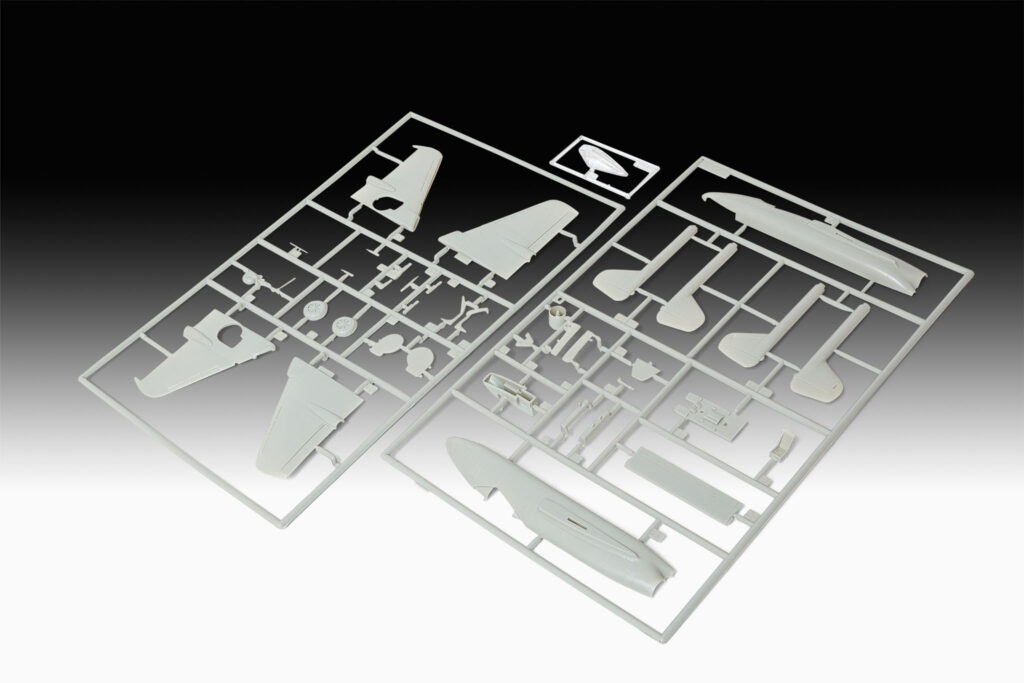
With 38 individual parts and 1:72 scale, the Flitzer model kit is compact but by no means trivial. The Level-4 rating primarily reflects the demands on painting. Since there is no historically documented original to rely on, it is entirely up to you which paint scheme you choose. Particularly popular in the community are realistic late-war Luftwaffe camouflage schemes, i.e., variants of the RLM-70/71/76 schemes or the typical gray-green patterns known from the He 162. Other model builders use the freedom for creative what-if scenarios with invented squadron badges.
As ideal neighbors in the display case, we recommend the other models in our P-Series Arado AR E.555 or the Messerschmitt P.1099A, because these patterns could theoretically have been in the air at the same time. Such a triptych of German jet projects from 1945 is simultaneously a high-quality model collection and a fascinating piece of visualized technical history.
Your Model Kit at a Glance
After more than 15 years, the Focke-Wulf TL Jäger „Flitzer” returns as the third release in our P-Series. The model kit contains an illustrated multilingual building instruction as well as a decal sheet with fictional unit markings. The technical data of the model kit at a glance: scale 1:72, 38 individual parts, difficulty level Level 4, age recommendation from 12 years, price 14.99 Euro.
Bring this extraordinary piece of alternative aviation history into your collection. The Flitzer was the fastest aircraft that never flew, and as a model, it now finally gets its deserved chance.
Order the Focke-Wulf TL Jäger „Flitzer” in the Revell Shop now