
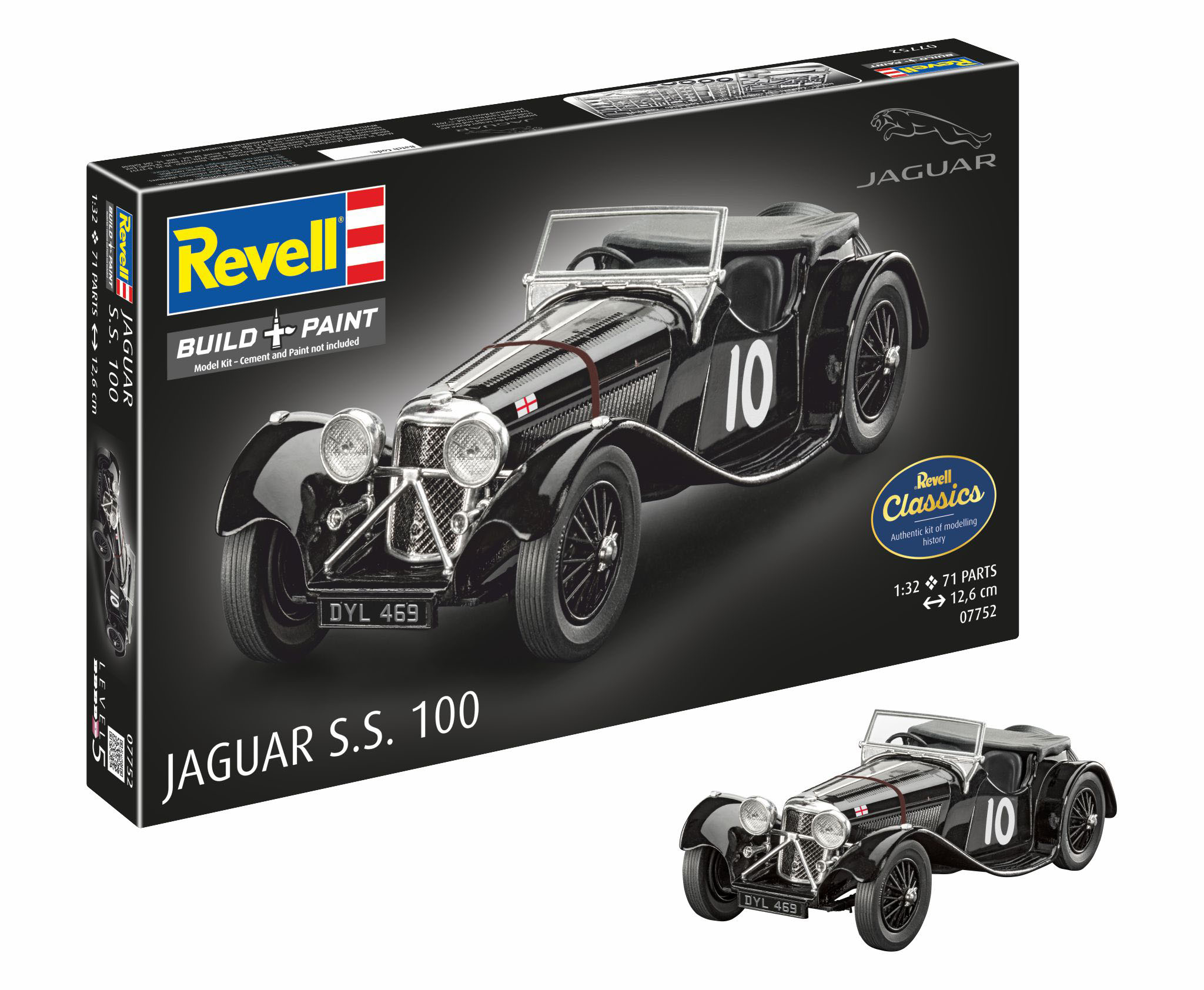
The Jaguar SS 100 is an absolute highlight for every modeller who is enthusiastic about classic British sports cars. Our kit brings this pre‑war racer into 1:32 scale directly onto your table and lets you experience the elegance and competitive spirit of the original up close.
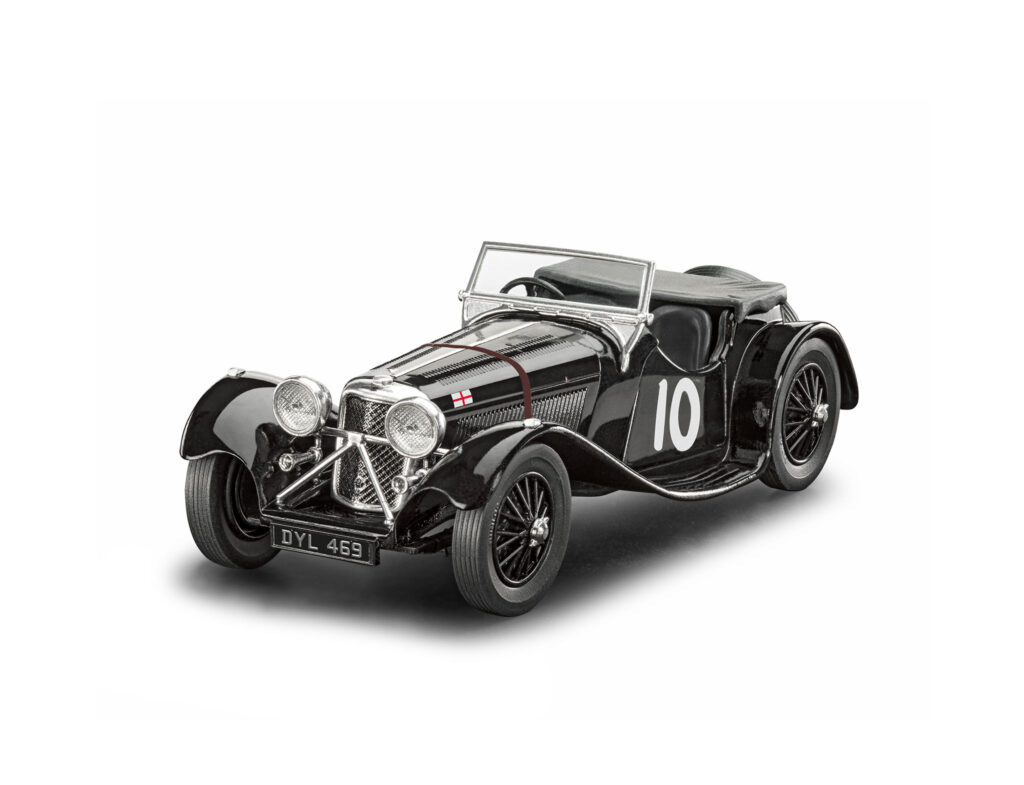
The Jaguar SS 100 ranks among the most iconic sports cars of the 1930s and marks the beginning of Jaguar’s great tradition with open roadsters. When you get started on our kit, you’re not just building a model, but bringing a piece of automotive history into your home that is characterised by speed, style and motorsport legends. In this article, we have highlighted all facets, from the technology via race victories to film appearances, so that during the build you have the full context and can imbue your model with the right passion.
Historical background of the Jaguar SS 100
The SS Jaguar 100 was created between 1936 and 1939 at SS Cars in Coventry, England, as the direct successor to the SS 90 and as the first model with the new Jaguar nomenclature. Only about 300 examples were produced, making the car one of the most sought‑after pre‑war classics today, with auction prices easily reaching into the millions. The designation SS 100 promised exactly 100 miles per hour top speed, an ambitious figure that immediately established the car as a high performance roadster and set it apart from the more down‑to‑earth tourers of the era.
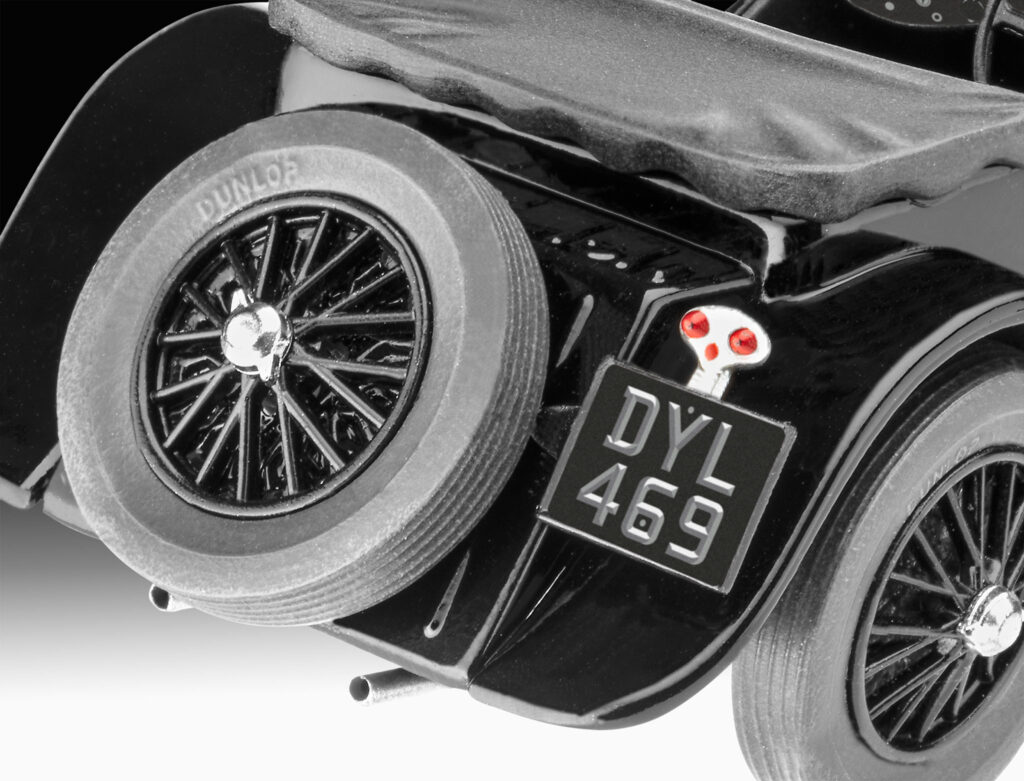
SS Cars had its roots in Swallow Sidecar, a coachbuilder and motorcycle sidecar manufacturer that rose to become an innovative sports car maker under William Lyons. The SS 100 embodied Lyons’ vision of elegant but aggressive design that was visually ahead of its time, with tapered mudguards that appeared revolutionary back then. After the Second World War, the SS part disappeared from the name because it evoked unpleasant associations, and Jaguar established itself as a synonym for British motorsport prestige.
Technology and performance of the original
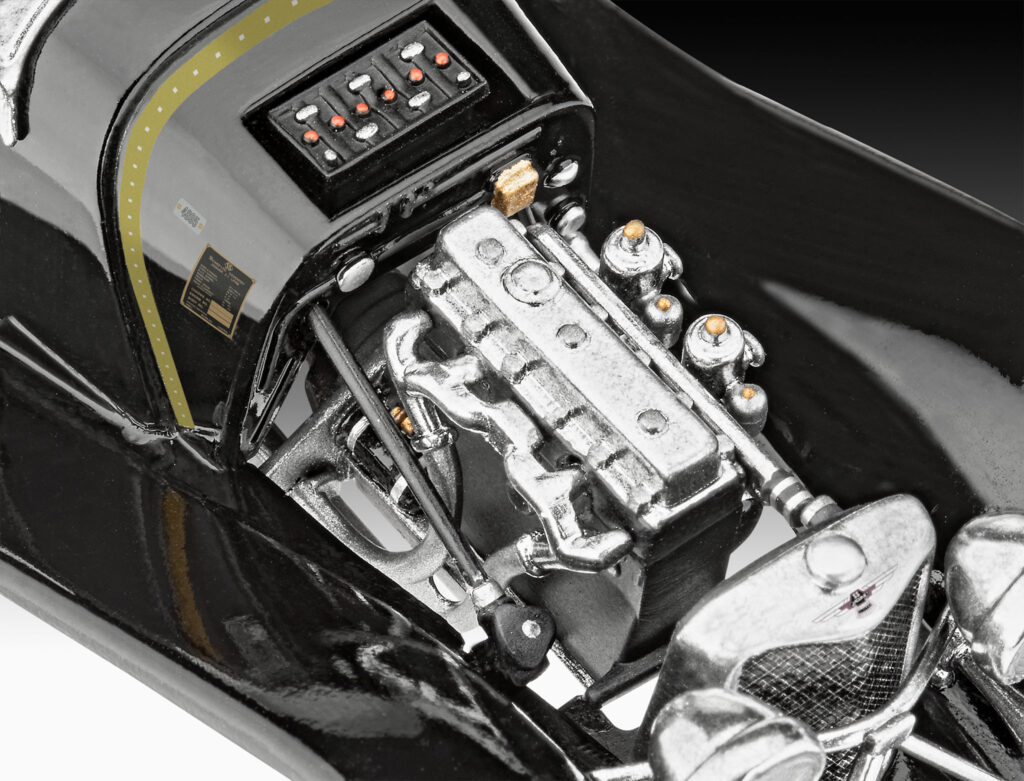
Under the iconic long bonnet sat a 2.5 litre or later 3.5 litre inline six‑cylinder with side valves, developed by William Heynes and tuned by Harry Weslake. Two SU carburettors provided up to 125 hp, which was transmitted via a synchromesh four‑speed gearbox to the rear wheels, while Girling drum brakes and a tubular frame with independent front suspension provided stability. With a weight of just over 1100 kilograms, the SS 100 reached its promised top speed and accelerated impressively for the time.
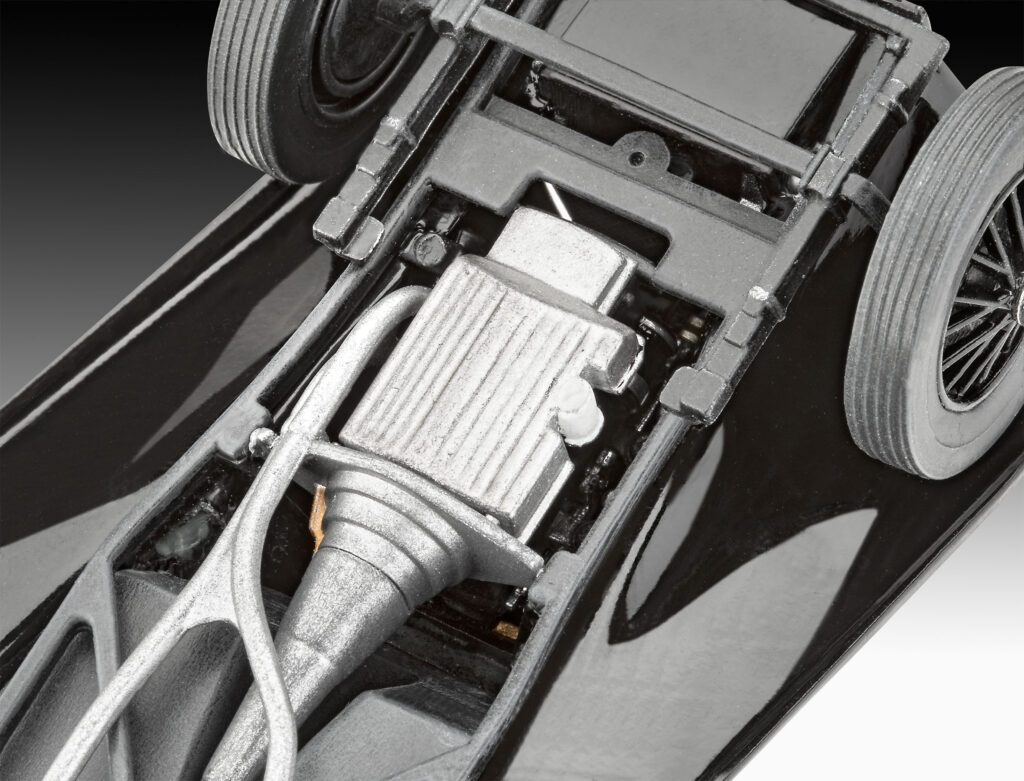
For us as modellers, these specs mean above all visible details like the bonnet ventilation flaps, the large exhaust mufflers and the sporty wire wheels, which we have precisely recreated in 75 parts. Tests by The Autocar confirmed for the 2.5 litre version around 95 miles per hour top speed and 13.5 seconds to 60 miles, values that made the SS 100 a serious alternative to European continental competitors. During the build, you can capture this dynamism with a tilted pose or open bonnet to make the power under the skin palpable.
Design and character of the roadster
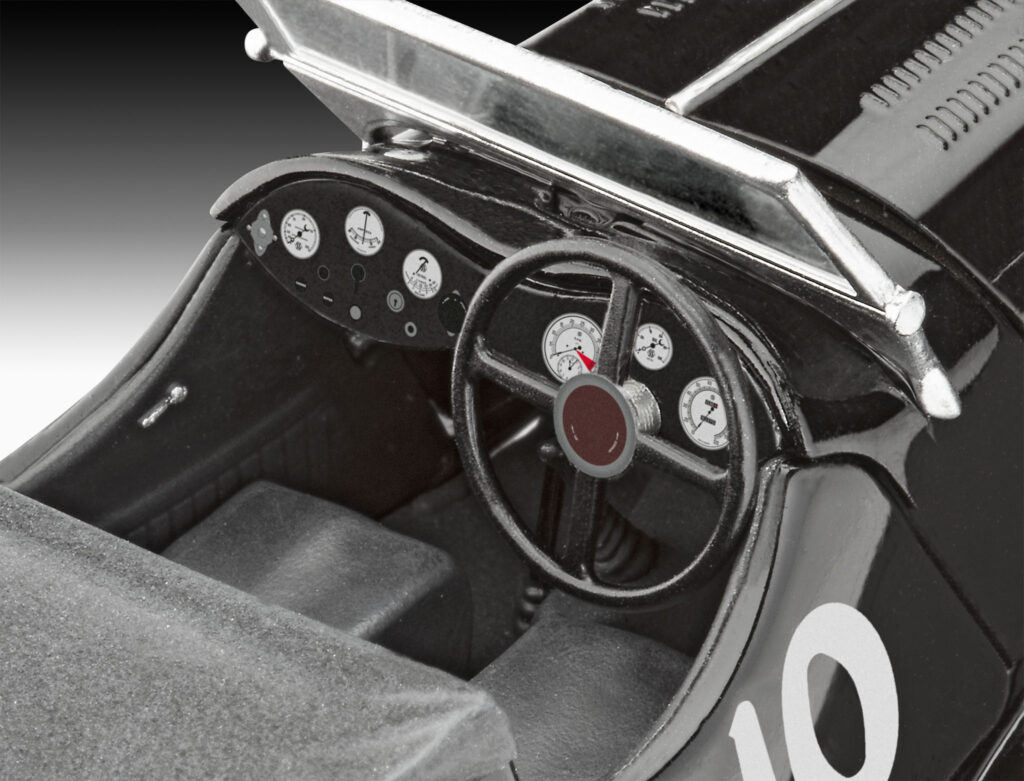
The SS 100 impresses with its slender silhouette featuring low‑slung mudguards, a freestanding radiator grille and a compact tail that suggests speed even at a standstill. The tapered front mudguards were a trademark that made the car look modern and aggressive long before aerodynamics became a buzzword. The interior features purist simplicity with leather seats, a round steering wheel and a clear instrument display, perfect for the sporty driver
Our kit captures this essence in 1:32 scale, with a model 125 mm long that offers enough detail depth to come alive with airbrush and wash techniques. The characteristic features like the side spare wheel and the large headlights invite fine effects, whether as a fresh factory prototype or a patinated rally veteran.
Revell Shop Link
Successes in motorsport and rallies
The SS 100 shone not only on the road but dominated rallies and trials. Factory cars won at the Alpine Trials, the Monte Carlo Rally and secured the team win at the RAC Rally. Particularly legendary is BWK 77, known as Old Number 8, which in 1936 drove penalty‑free in the International Alpine Trial with Tommy Wisdom and his wife Elsie and secured the first Jaguar victory, including the Coupe des Glaciers. After conversion to a lightweight 3.5 litre racer, it competed at Brooklands and Shelsley Walsh, and even in 1948 a modified SS 100 won the first race at Goodwood through FC Pycroft.
These successes make the SS 100 the ideal subject for your models. Imagine your kit posing as an Alpine Trial veteran with race numbers, spare tyres and dust trail.
BWK 77 deserves its own biography. First sold to Sammy Newsome, it was bought back, used as a works development car and experienced its triumph with the Wisdoms. After the war, it remained in racing, was restored in the 60s and still drives events like the Spa Six Hours today. Dave Garroway, US presenter, fitted his example with alligator leather and got an early XK engine for racing.
In literature, the SS 100 lives on through James Leasor’s novels, where a Belgravia dealer with his car acts as a side character. The book SS Jaguar 100 The Remarkable Story of 18008 from Porter Press is dedicated extensively to BWK 77’s odyssey. Such stories inspire you during the build to unique details like personalised plaques or special paints.
Although rarer than later Jaguars, the SS 100 pops up in productions. In the Columbo episode Etude in Black (1972), it cruises through scenes, Hue and Cry (1947) uses it for British charm, and Festival of Britain shows it iconically. These appearances underscore its retro appeal, perfect for your dioramas with film set.
Our Revell kit of the Jaguar SS 100
We at Revell have implemented the Jaguar S.S. 100 as a faithful reproduction of the 1935 model, with the distinctive tapered mudguards and sporty execution. The 1:32 kit comprises 75 precise parts, reaches Level 5 difficulty for experienced modellers from 13 years and results in a 125 mm long masterpiece. The multilingual instructions and background info help you get every detail right.
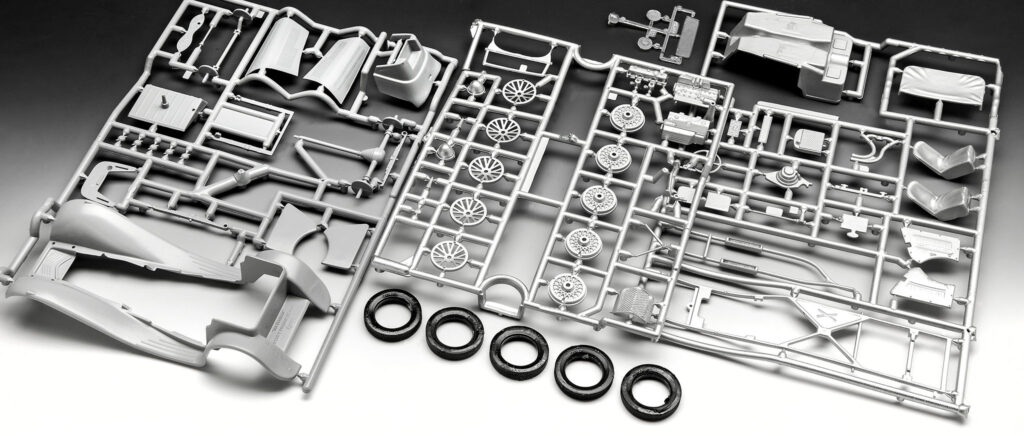
As part of our Revell Classics series, it celebrates the collector value of this fast, lightweight pre‑war car. Paints and glue are deliberately omitted so you can be creative. Whether you build it as a roadworthy elegant or rally fighter, the model invites everything.
With its mix of history, design and motorsport, the SS 100 fits perfectly into every model collection. It connects you to Jaguar’s golden 30s and offers endless customising possibilities. Grab it and let the legend come to life!
Inspiration for the build
Jaguar S.S. 100 2 ½ Litre, 1938, birth of the Jaguar brand, Mille Miglia Racer in top condition
Jaguar S.S. 100 Suffolk, 1977, over 200 hp and 200 km/h in the prewar oldtimer!